

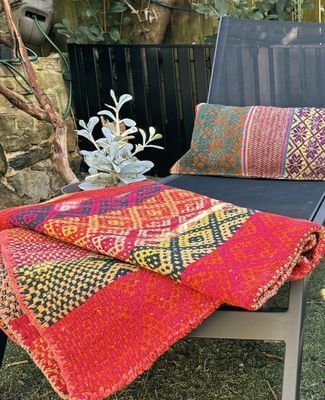
From Andean Blanket to Everyday Object: The Frazada Story
There is a seam running down the centre of every frazada. It is not a flaw. It is a record — evidence of the two halves woven separately on a backstrap loom and joined at the middle by hand. Once you know to look for it, you start to understand something about how these textiles are made: slowly, in sections, by a single person, over weeks.
That seam is also the reason no two frazadas are identical. The dye batch changes. The weaver's rhythm changes. The wool itself changes, season by season, fleece by fleece. What you are looking at when you look at a frazada is not a pattern reproduced. It is a document of a specific moment — a particular person, a particular highland winter, a particular set of colours pulled from the earth.

What is a frazada?
A frazada is a handwoven Andean blanket. Heavy, dense, woven from highland sheep wool, and made using techniques that have not changed in centuries. The word itself is Spanish — from frazada, meaning blanket — but the object predates the Spanish by a long way.
Frazadas are not decorative in origin. They were made to be used: as bedding at altitude, as wrapping against the cold, as surfaces to work on and sit on and carry things in. Their boldness — the geometry, the colour — is not ornament. It is the weaver's voice, worked in wool.
Where do frazadas come from?
The frazada tradition belongs to the highlands of the Andes: the altiplano of southern Peru and Bolivia, where the Aymara people have woven textiles for generations. These are communities that live at altitude — places where the cold comes in hard and the sheep produce a wool that is dense and lanolin-rich and built for it.
The weaving centres that still produce traditional frazadas sit mostly in the Peruvian highlands north and east of Lake Titicaca. The women who make them learned from their mothers, who learned from theirs. The patterns — the zigzags, the stepped diamonds, the bold stripes — are not randomly assigned. They carry meaning: regional identity, family tradition, the weaver's own sensibility.
The frazadas Orange Inca works with are vintage pieces — textiles that were already used and loved before we found them. They come with a life already lived in them, which is part of what makes them different from anything woven to a pattern sheet.
How is a frazada made?
The process begins before the loom. The wool is cleaned, spun, and dyed — naturally, using plant-based pigments and mineral mordants that have been used in Andean dyeing for centuries. Cochineal for the deep reds. Indigo for blues. Weld and chilca for the warm yellows. The colours are not standardised. They depend on the dye lot, the mineral content of the water, the time of year.
Once the wool is dyed and dried, it is wound onto the loom. The backstrap loom is simple in construction — two bars, a series of cords, and the weaver's own body as one end of the tension. The loom is not fixed to a wall or a frame. The weaver anchors one end to a post or tree, wraps the other around her waist, and leans back to create the tension that makes the weave possible. It is intimate in a way that machine weaving cannot be. The cloth is literally tethered to the person making it.
A frazada is woven in two halves, each the full width of the loom. The weaver works one panel to completion, then begins the second — keeping the colours and pattern as consistent as she can, but never exactly the same. When both panels are finished, they are joined at the centre by hand, seam to seam, in a stitch that is itself part of the textile's character.
From start to finish, a single frazada takes between four and six weeks. Not four to six weeks of full-time weaving — but four to six weeks of fitting this work into a life, alongside everything else. That timeline is in the object. You can feel it when you pick one up.

Why is every frazada different?
Because of everything described above. The dye lot. The weaver. The wool from that particular season's shearing. The light in the highlands when she was working, which perhaps affected what colours she chose to set against each other. The way the tension in the loom shifted over the weeks.
No production process designed to replicate a pattern can account for all of this. And the frazada tradition does not try to. Variation is not a quality-control problem in Andean weaving — it is the point. What you are buying when you buy a frazada is not a unit from a run. It is a singular piece, and when it is gone, that particular combination of colour and pattern and maker will not exist again.
This is also why vintage frazadas have a quality that new production cannot match. They have already softened and mellowed. The wool has relaxed into itself. The colours have deepened slightly with age and light. What arrives is already finished in the way that only time finishes things.

What can you actually do with a frazada at home?
More than most people expect when they first encounter one.
The most obvious use is as a floor rug. A frazada laid flat reads immediately as a rug — the weight is right, the density is right, and the scale (most frazadas are around 160 by 130 centimetres) works well in a bedroom, at the foot of a bed, or in a reading corner. Because they are woven from wool, they are also naturally resilient underfoot in a way that synthetic rugs are not.
But frazadas are not only rugs. Draped over the arm of a sofa, one becomes the most interesting throw in the room — nothing from a homewares chain will have that geometry, that colour, that weight. Hung from a rod on a bare wall, a frazada functions as textile art without needing a frame. Used on a bed, it adds a layer of warmth and visual weight that a standard blanket cannot. Taken outside, it makes a picnic blanket that is sturdy enough to sit on and beautiful enough to photograph.
The versatility is real, not marketing language. Frazadas were designed to be used in multiple ways — that was their original purpose. They have not been made more delicate by becoming collectible.

How does a frazada become a bag or a cushion?
This is the part of the story that is particular to Orange Inca.
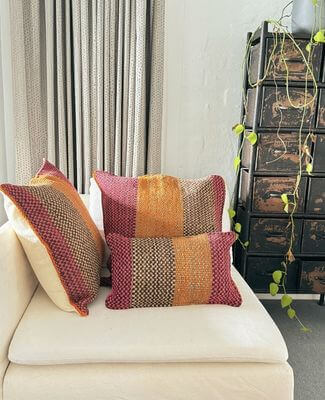
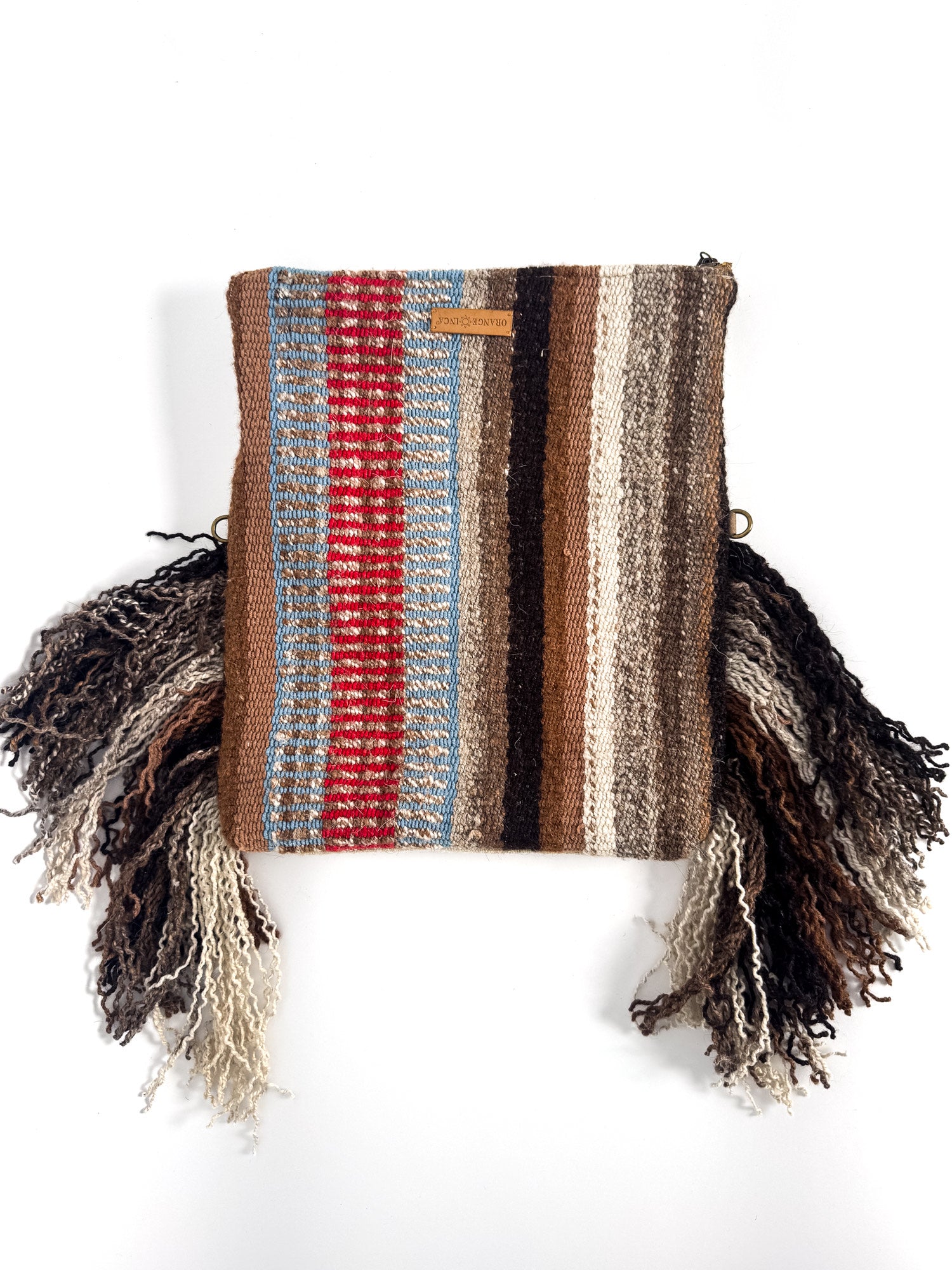
When we work with frazadas that have small imperfections — a section of the weave that is thinner, a panel that didn't join cleanly, a piece that is too worn at the edges to be used whole — we cut from it. A skilled pattern-maker cuts the pieces for a cushion cover from the strongest, most beautiful section of the textile. What might otherwise be a damaged piece becomes something new, and the frazada pattern — that particular set of colours, that particular geometry — moves into a different form.
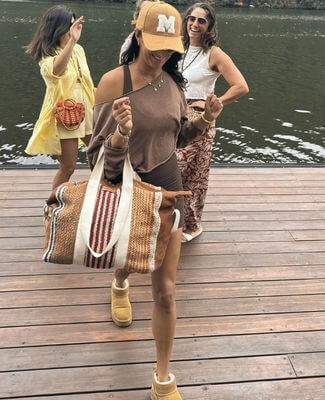
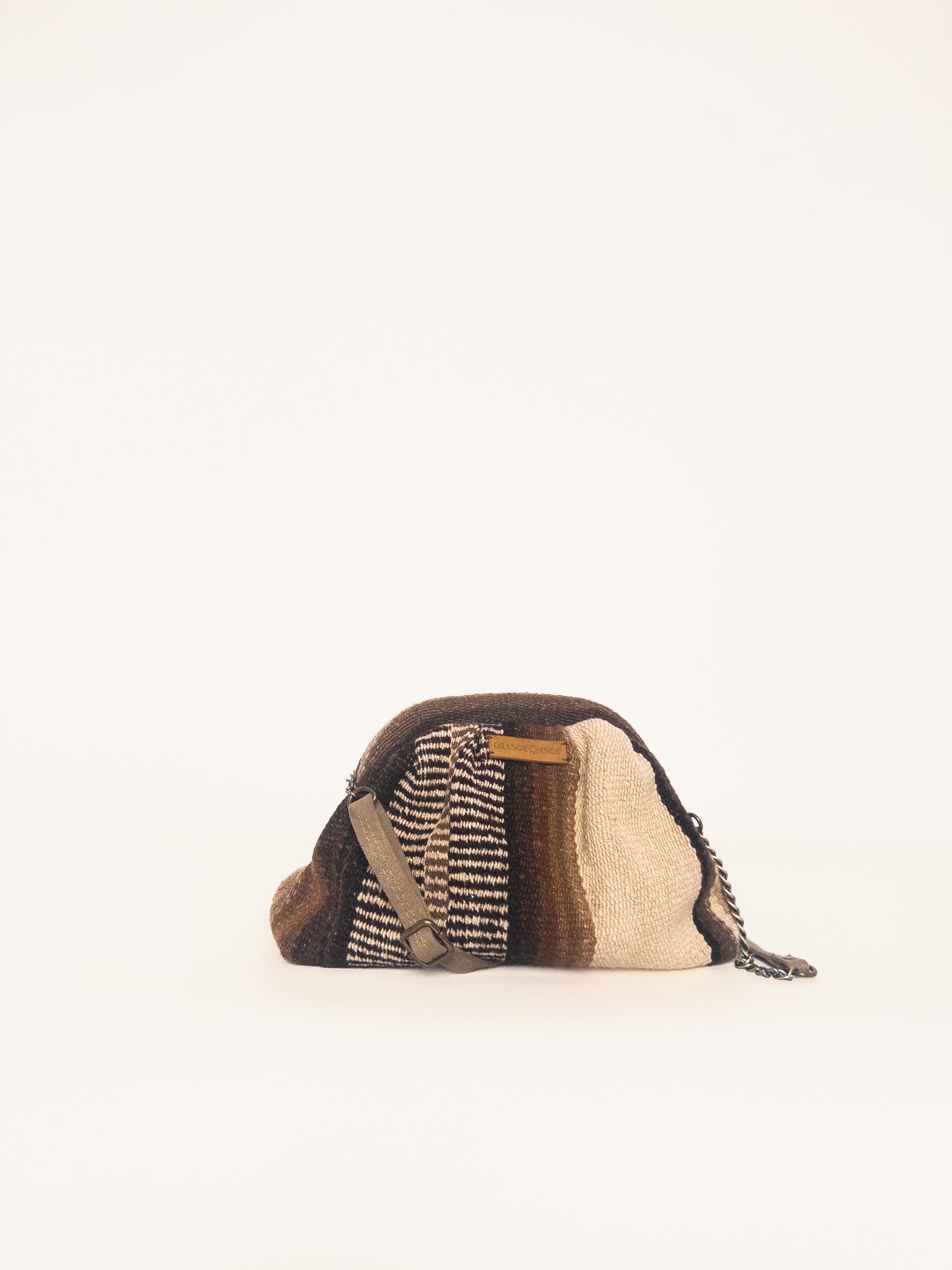
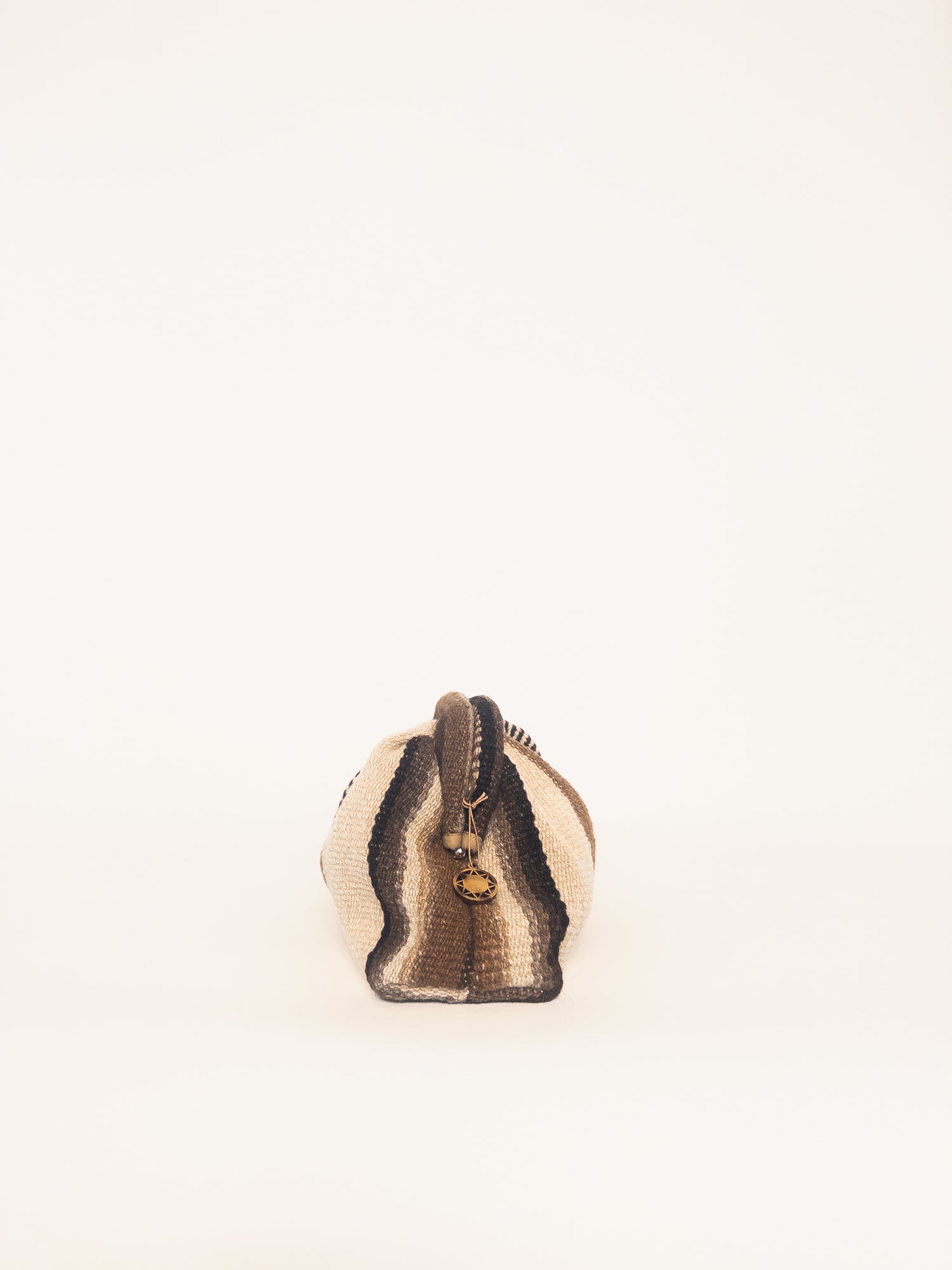
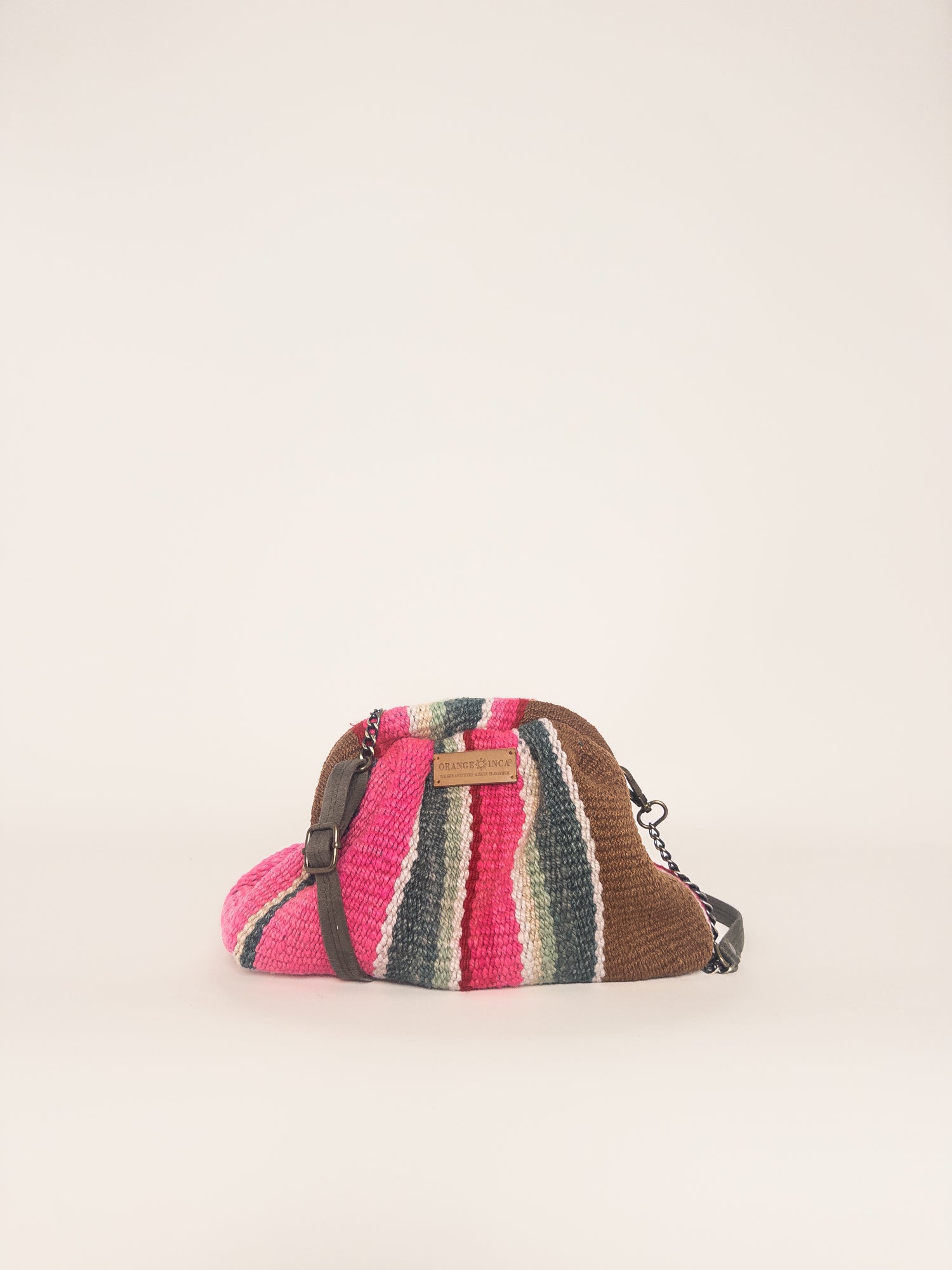
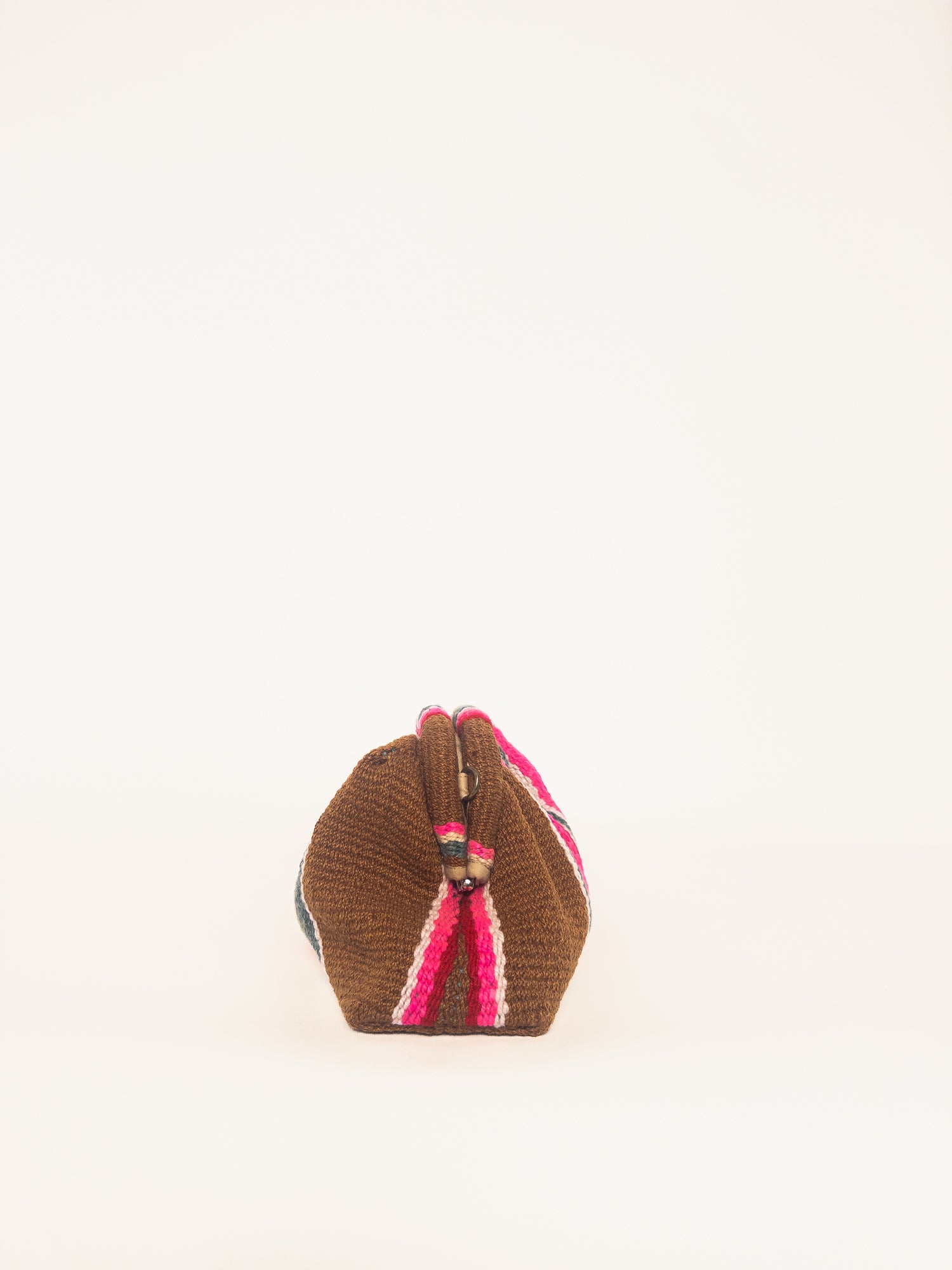
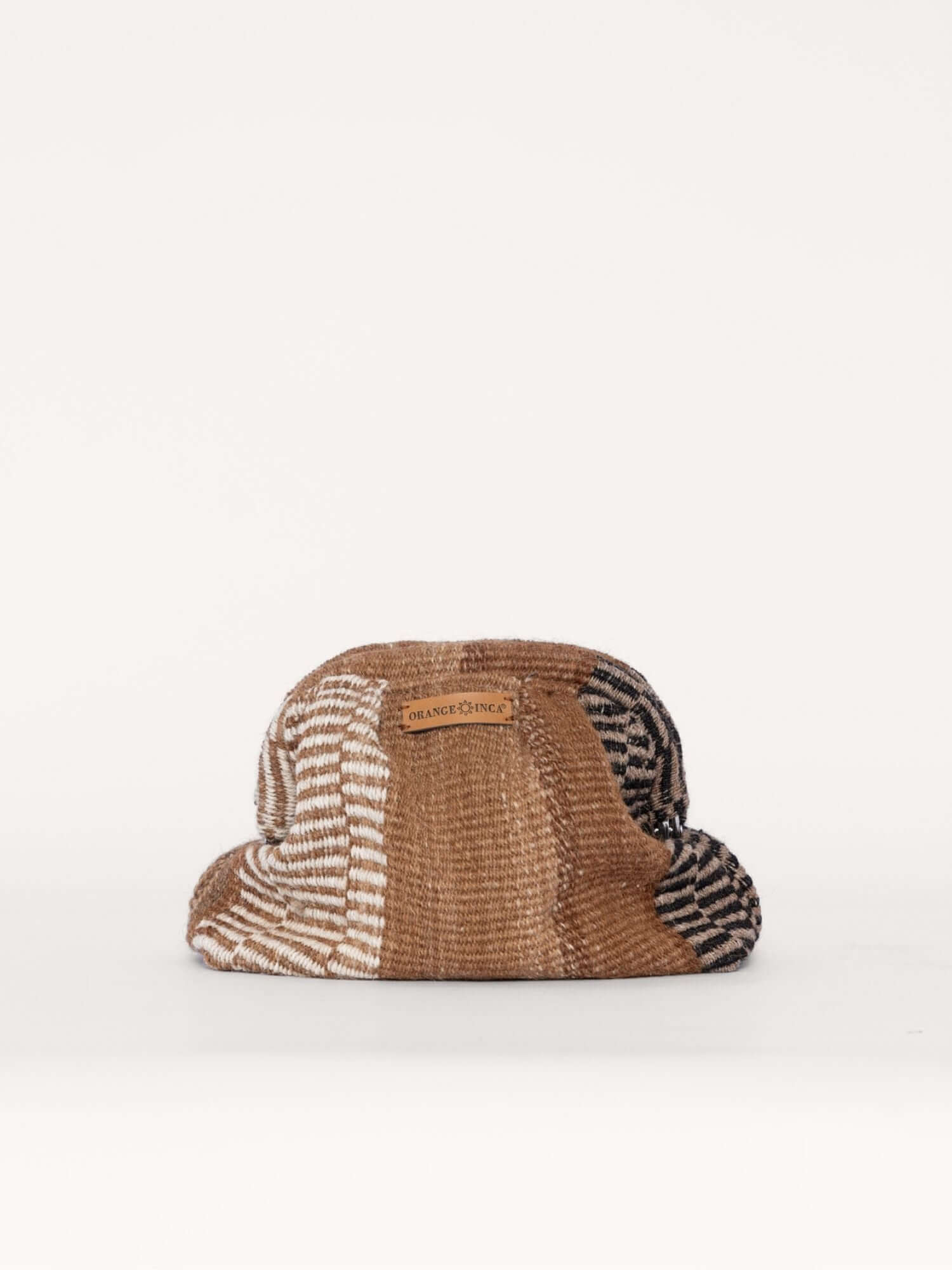
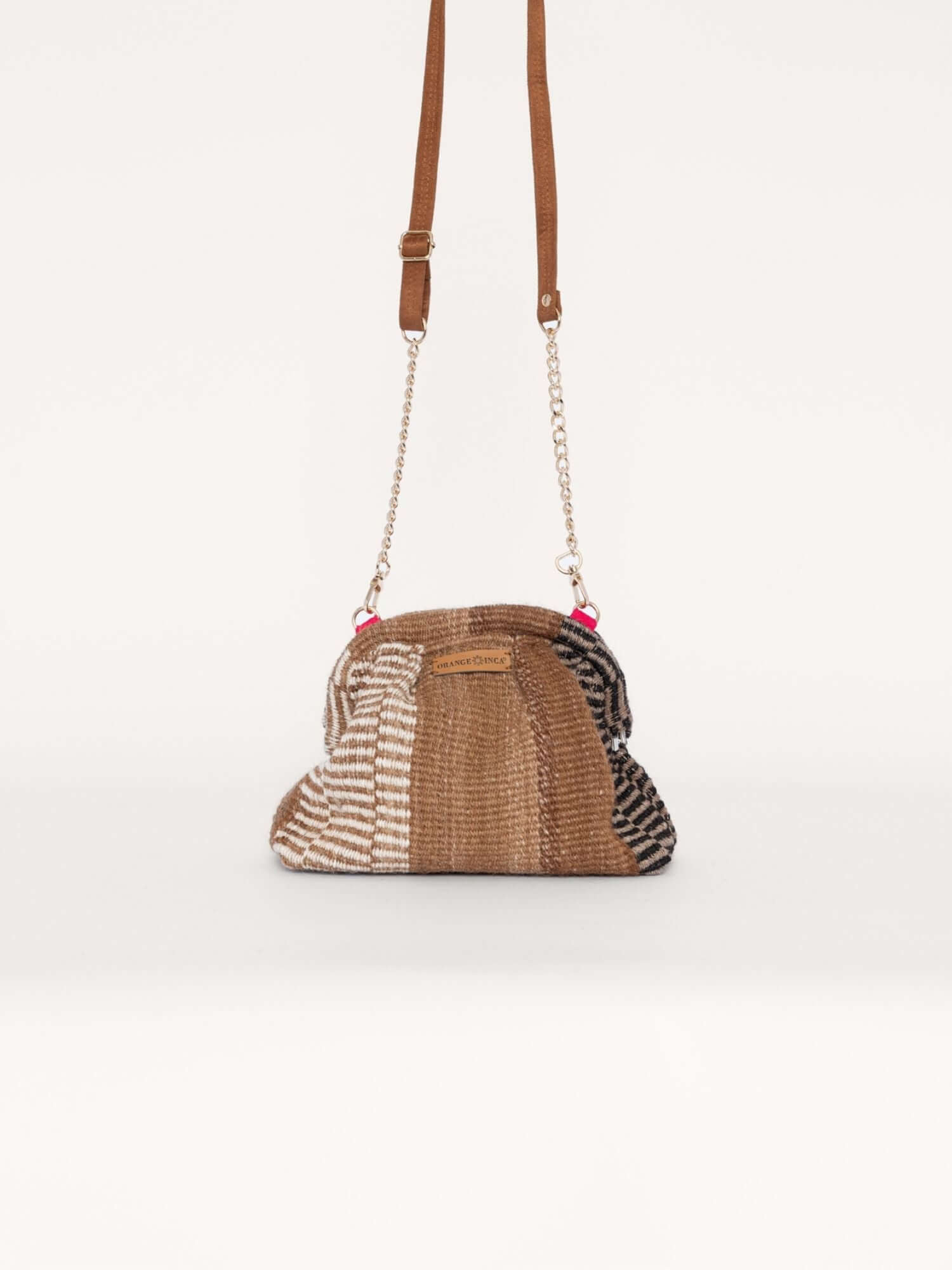
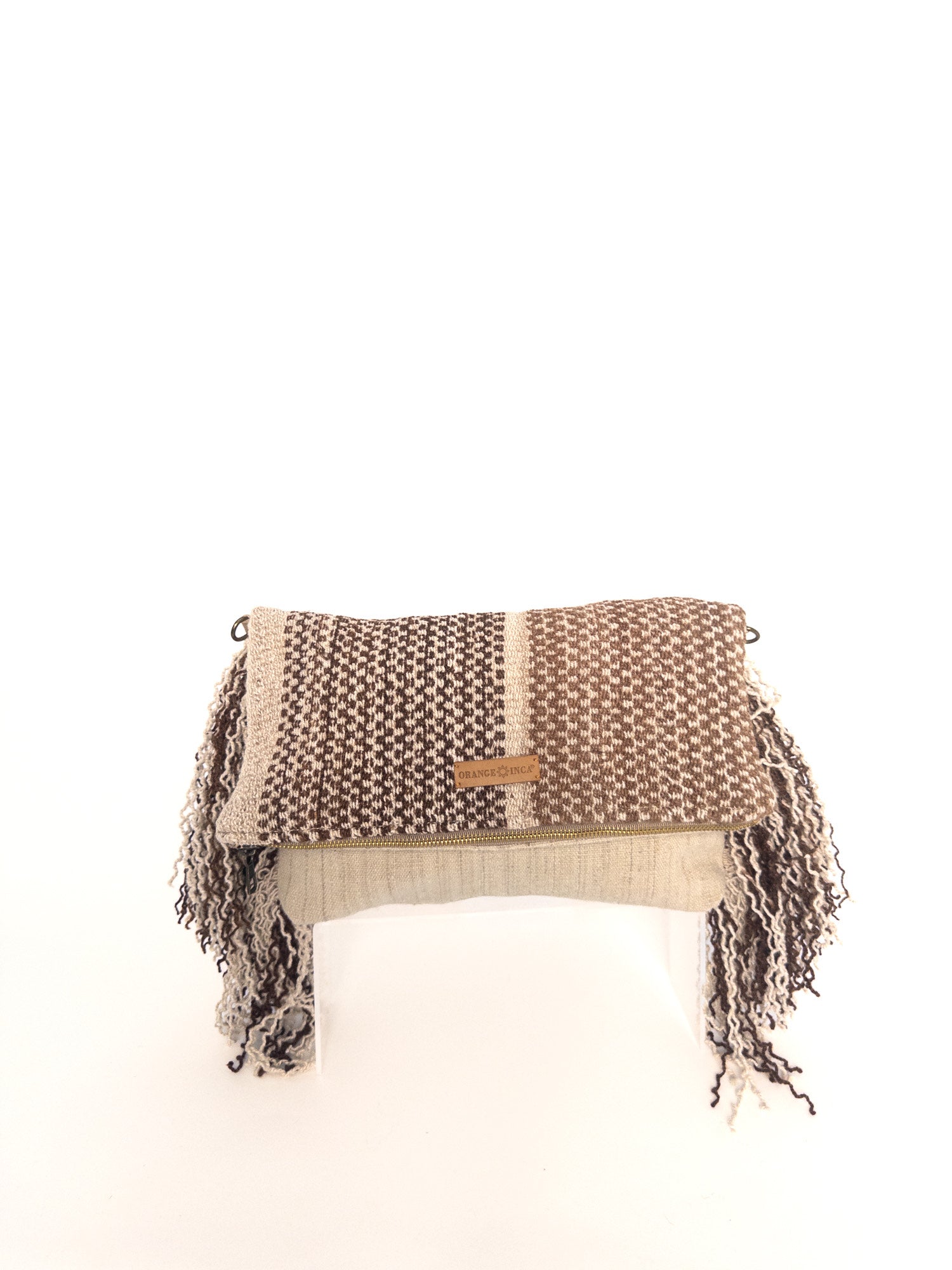
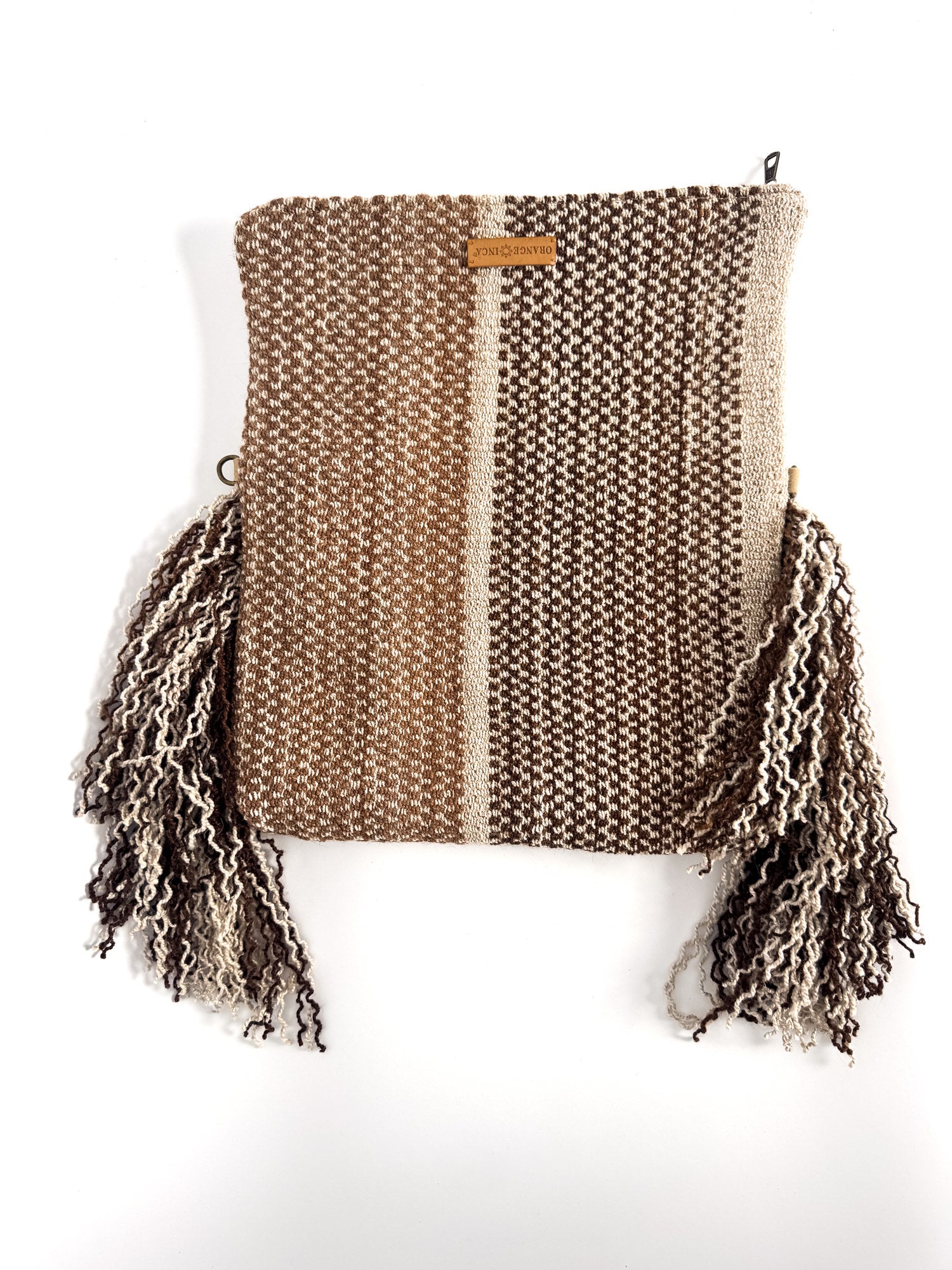
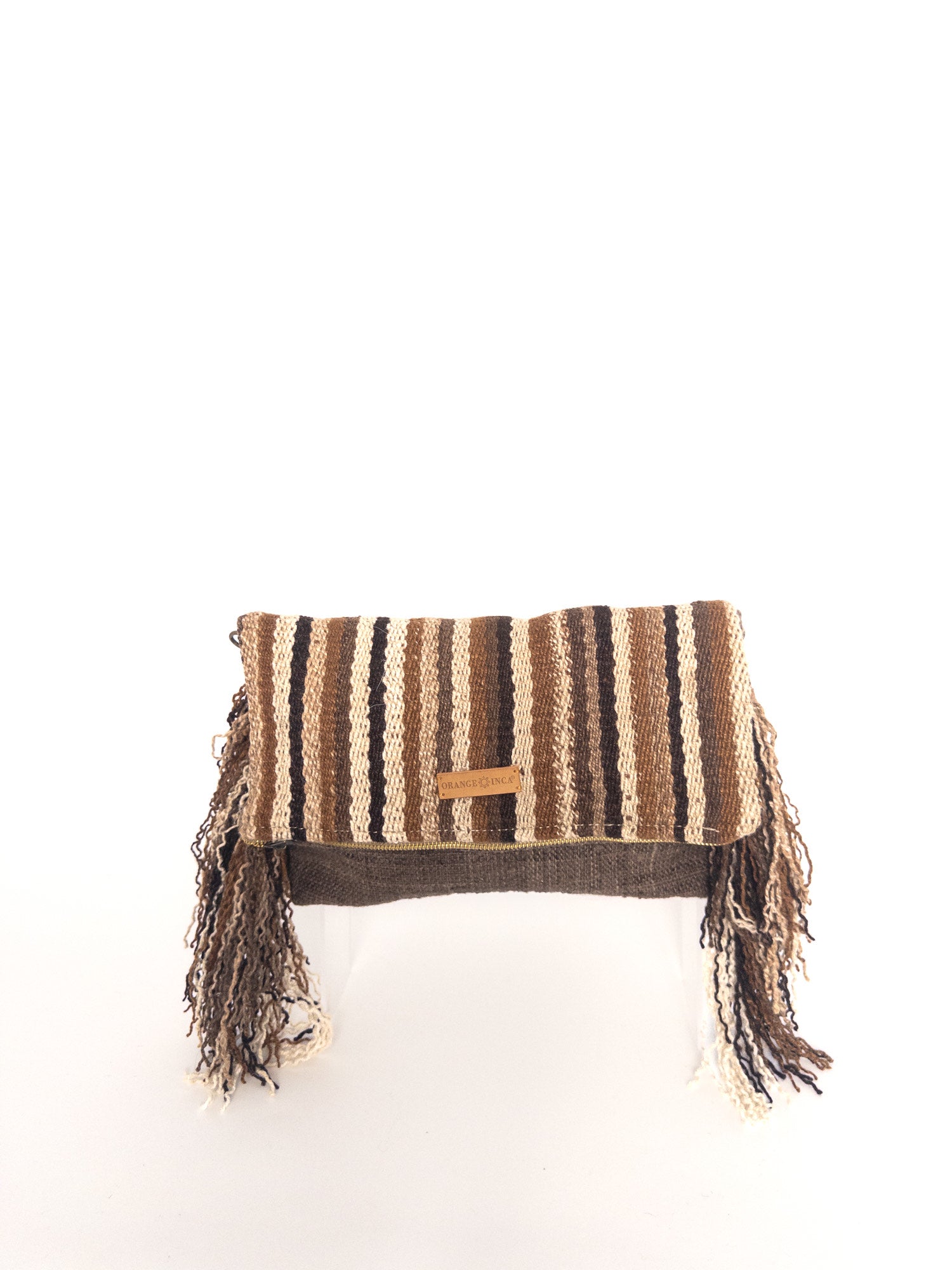
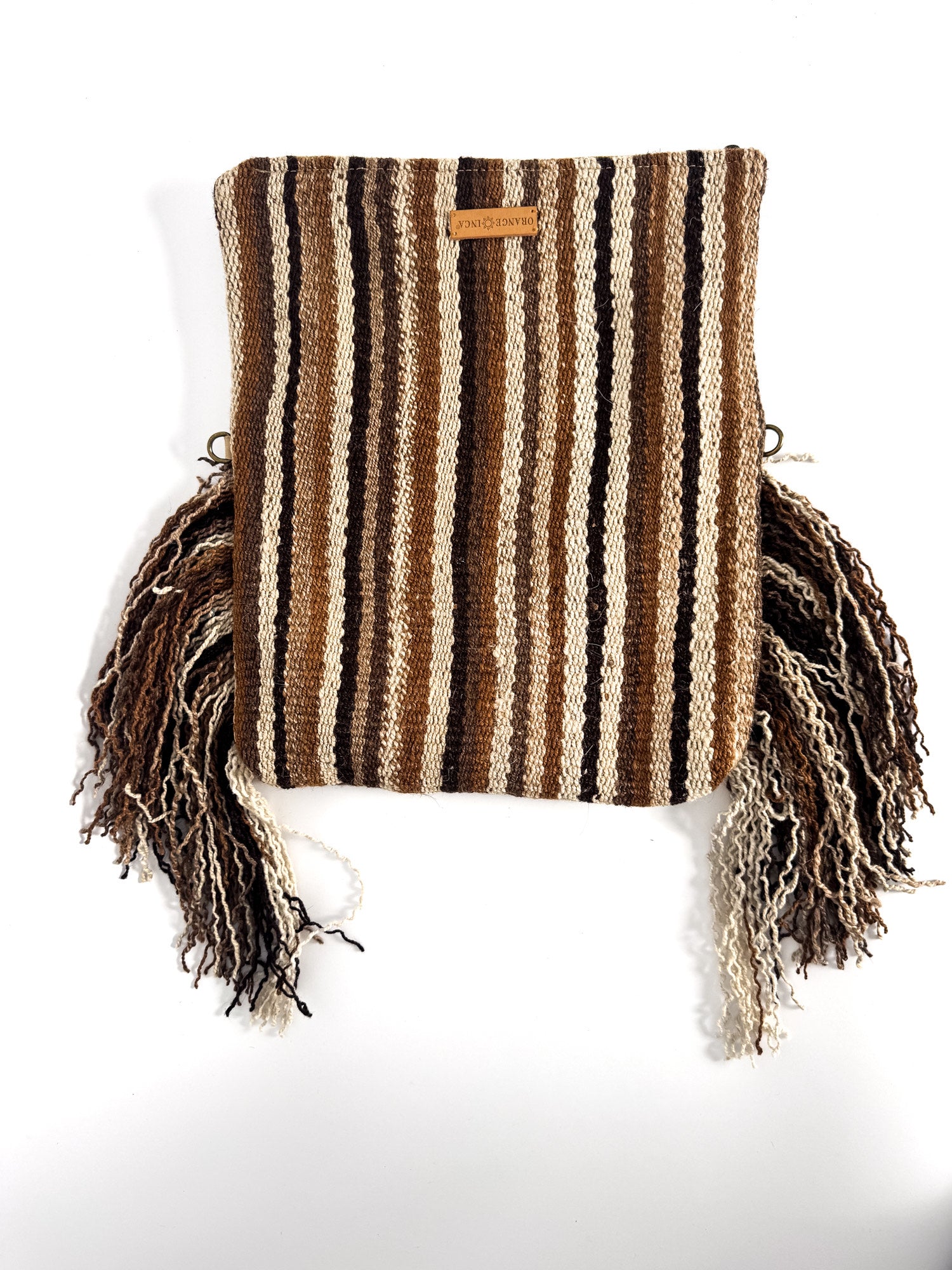
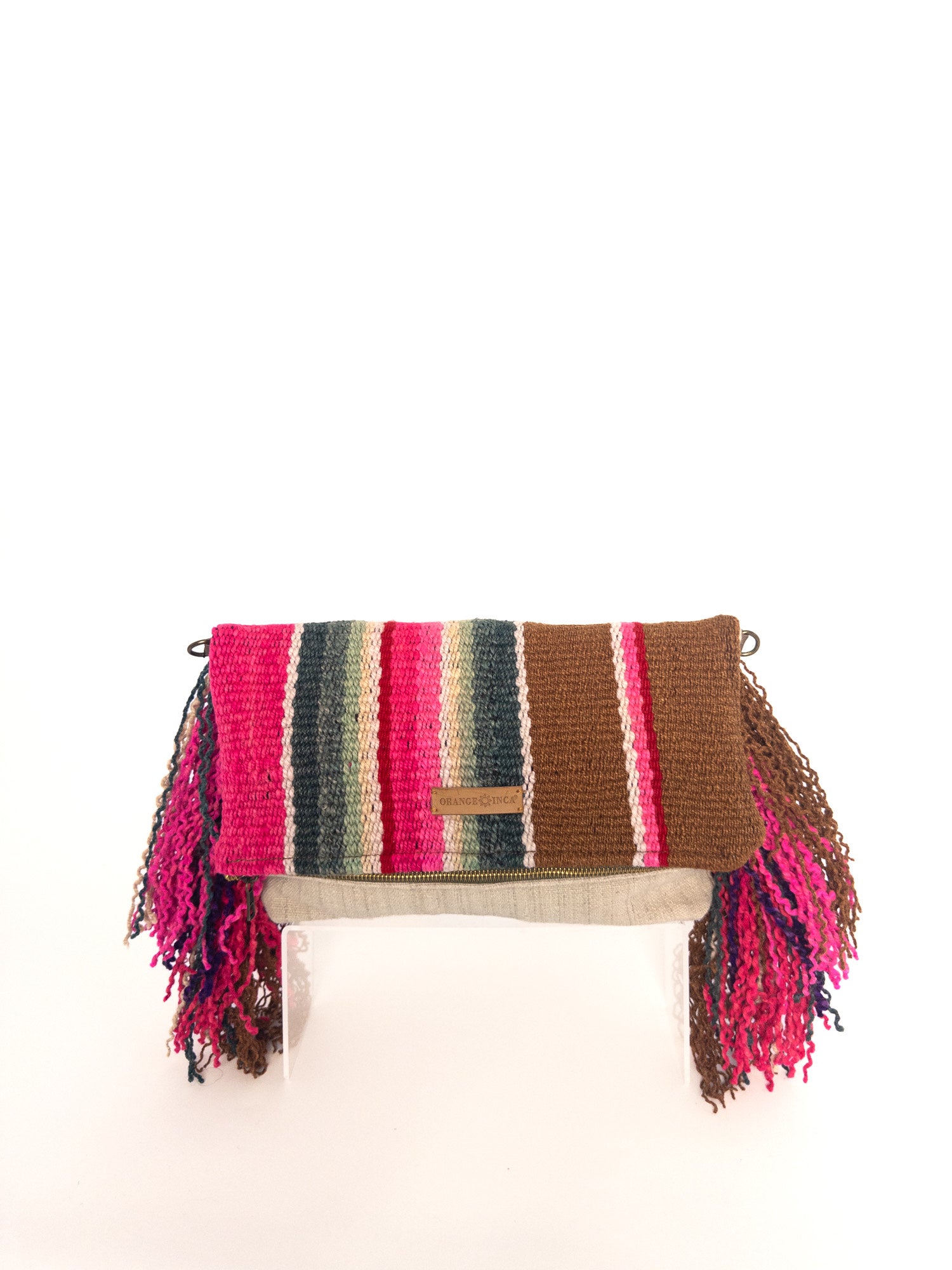
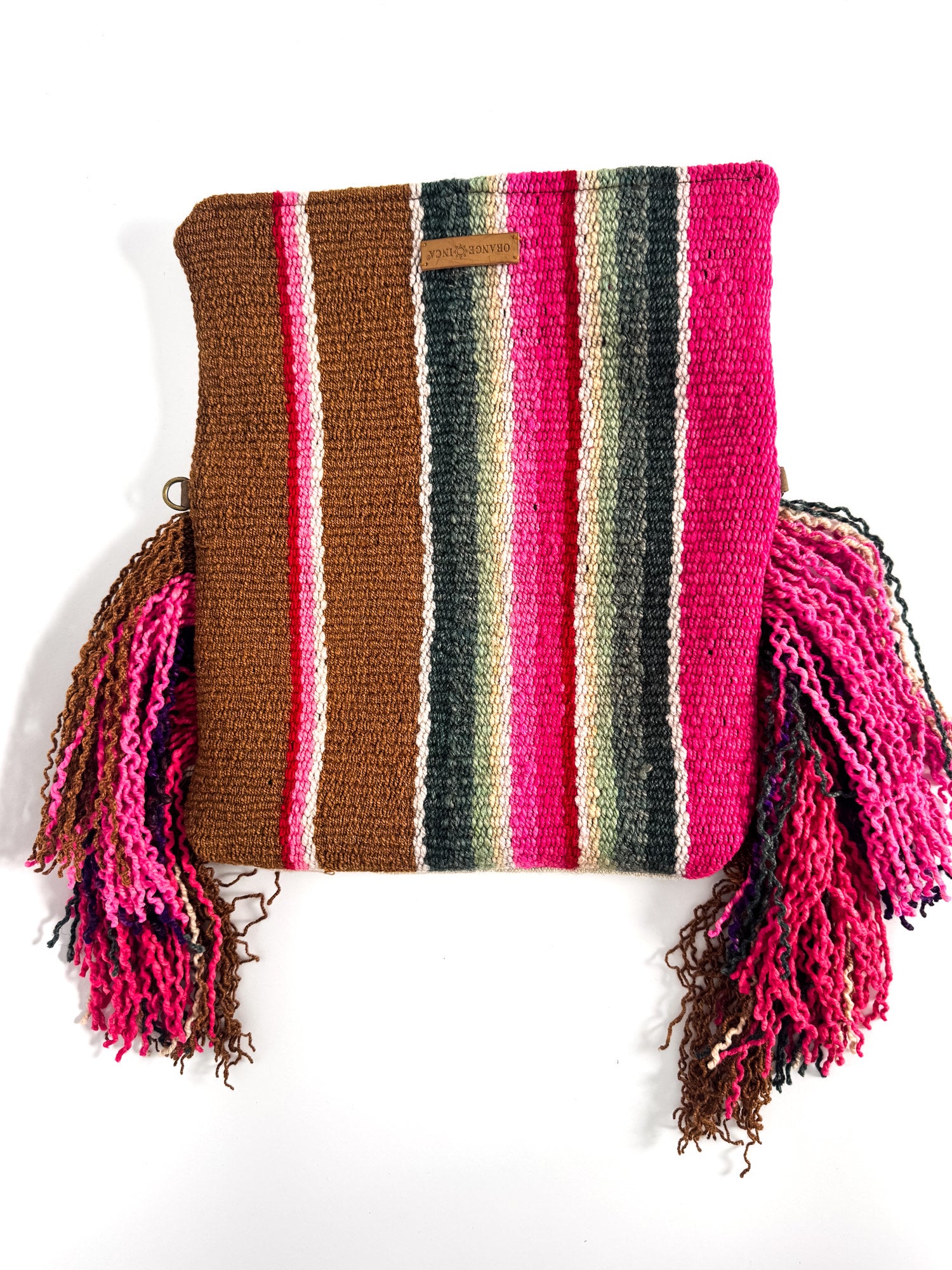
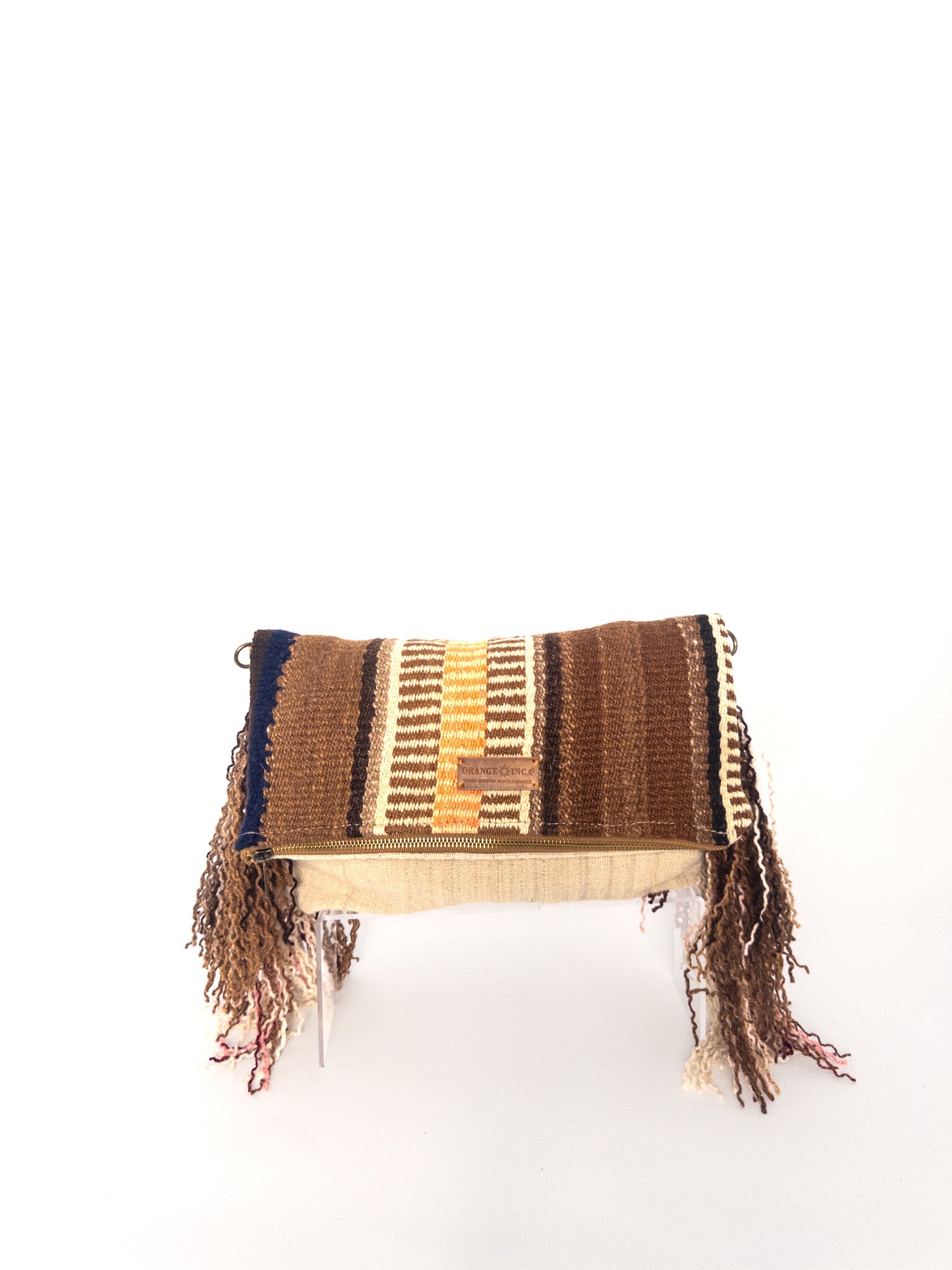
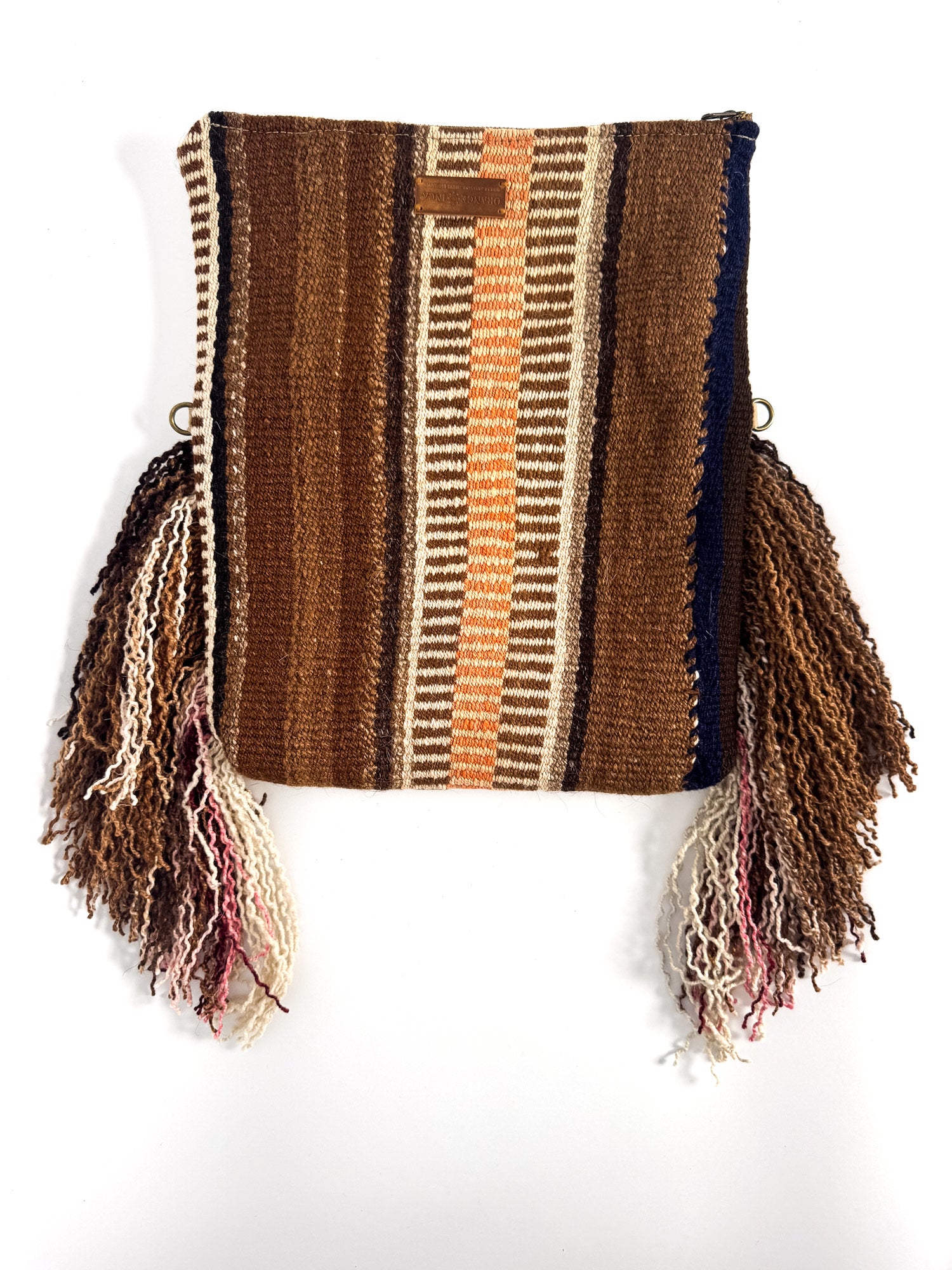
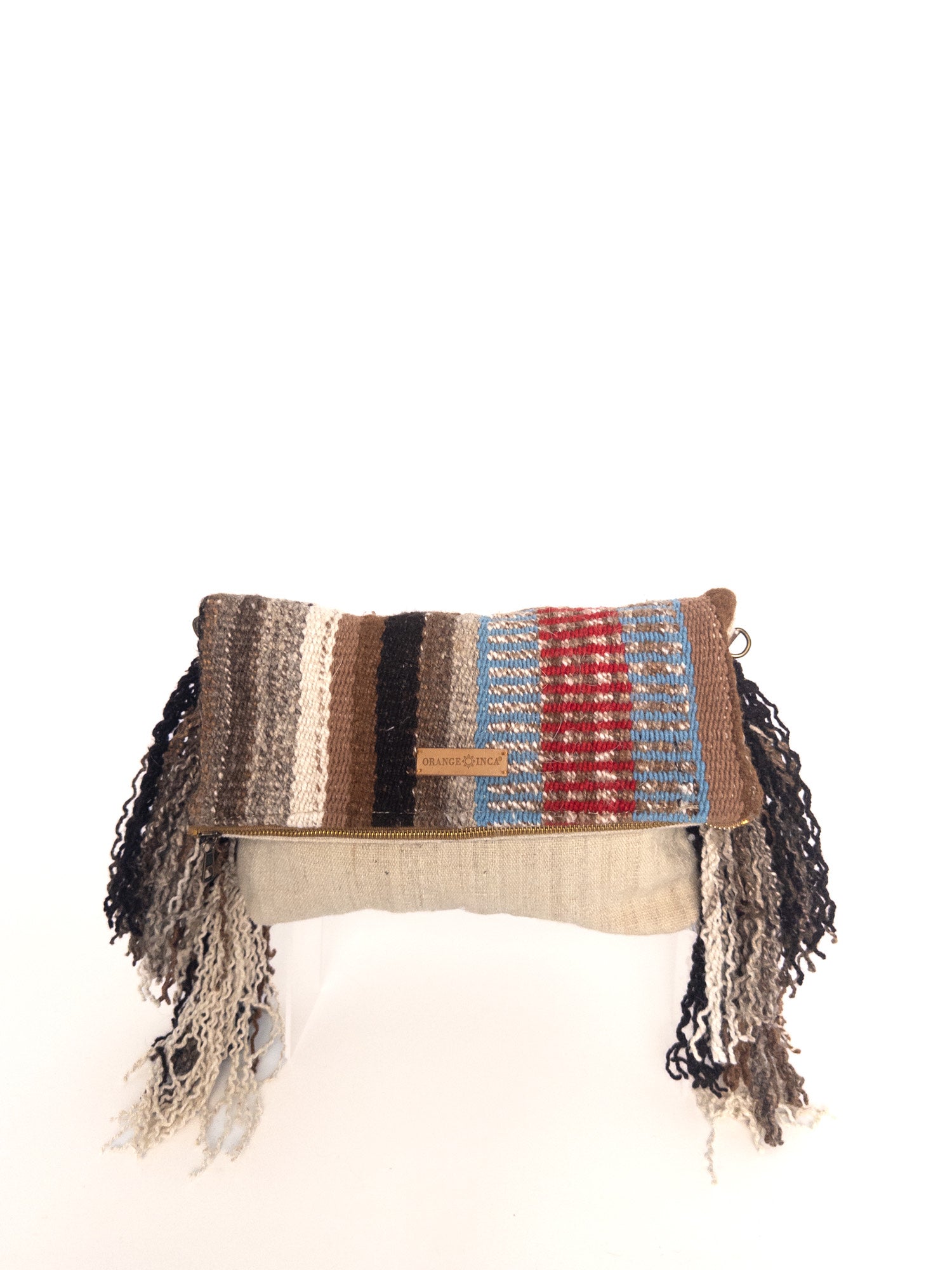
The same logic applies to the frazada bag collection. Each bag is cut from a single frazada. The pattern on the front panel and the pattern on the back are from the same weave — they match because they were once the same textile. And because no two frazadas are the same, no two bags are the same. The bag you buy is the only one that exists.
There is something worth sitting with in that. In a world where most things are made in thousands, the frazada bag and the frazada cushion are genuinely singular. Not in a marketing sense. In a factual one.

Frazadas ask something of you that most objects do not. They ask you to look at them. Not briefly, not on a scroll — but to actually look, to find the seam, to notice where the dye deepened on one pass of the shuttle and lightened on the next. They are not backgrounds. They are presences.
That is why they translate so well from the Andean highlands to a living room in Sydney or Amsterdam. Not because they have been made to fit a particular aesthetic. But because they are genuinely made — and genuinely made things carry a quality of attention that crosses any distance.
Further Reading
- The Timeless Craft of Frazadas: Tradition and Versatility — a closer look at the weaving techniques and cultural history behind the frazada tradition
- Five Ways to Style a Frazada in Your Home — practical ideas for using a frazada as a rug, throw, wall hanging, and more
- Frazada vs Kilim: What's the Difference? — how a frazada and a kilim compare in weave, origin, weight, and use
- How to Care for Your Frazada Rug — routine maintenance, spills, moths, sunlight, storage, and when to call a specialist
Shop the frazada collection:
Frazada Rugs & Blankets · Frazada Cushion Covers · Frazada Handbags

Leave a comment
This site is protected by hCaptcha and the hCaptcha Privacy Policy and Terms of Service apply.