
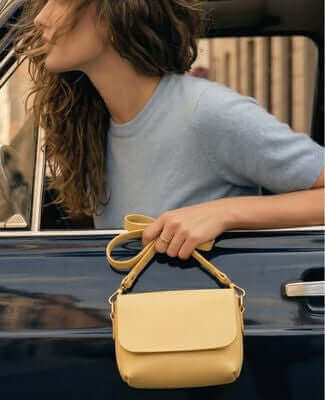
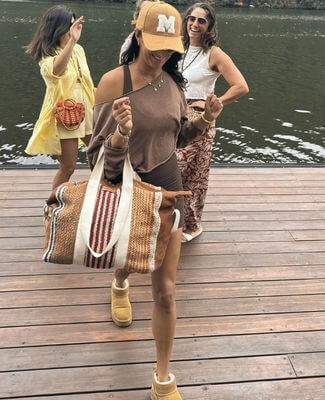
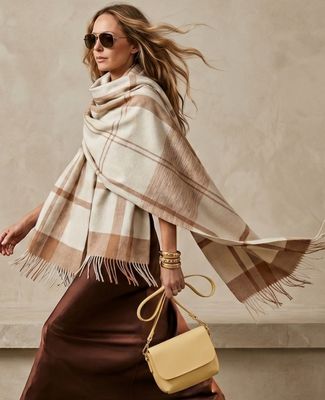
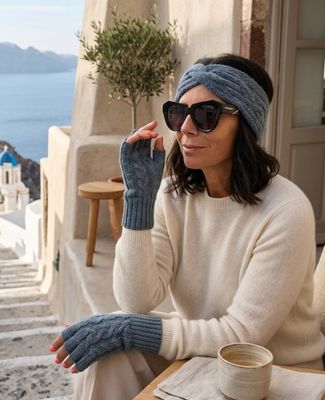
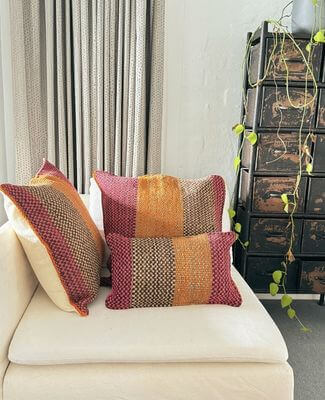
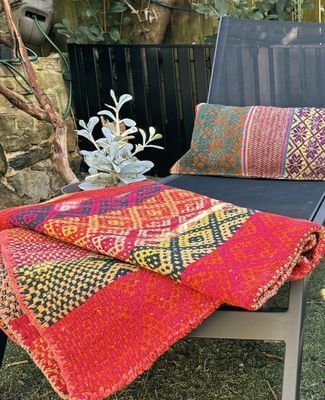

We make handwoven bags and Andean textiles with artisans in Peru, and we design them in Australia. Everyday colour, made by hand, built to last.
That's the short version. The long one is below, and it starts in a house in Lima.
Marcela grew up in Lima in a house full of music, art and dance. Performers rehearsed there. Between rehearsals the costumes hung over the backs of chairs, and when nobody was watching she put them on — sleeves past her hands, skirts dragging on the floor. Sometimes her mother had one made in her size, and she got to go on stage too.
Her mother, Maria del Carmen, used to take her along to the artisans' workshops. The women there called her chica terremoto. Earthquake girl. She would pull the fabrics down off the shelves and put them together in combinations nobody had asked for, and her mother would have to rebuild the whole workshop before they were allowed to leave.
She has been doing more or less the same thing ever since.
Colour isn't a trend where I'm from. It's just what things look like.
She lived in Amsterdam for eleven years. When she moved to Australia with her Dutch partner Léon, she missed that colour every day. She went looking for it in shops here and kept coming home with nothing. The looking took her back to Peru, to communities along the coast and high in the Andes where women have kept these techniques alive for generations.
Why we do this
The first pieces were for herself. A bag she wanted and couldn't find. Something for her own house. What surprised her was how much it changed — one object in a room she walked through every day, and the whole room felt warmer.
Colour is a gift from nature and it costs nothing to love it. Marcela thinks a lot of us have quietly talked ourselves out of it. When she visits a friend and finds one thing in the house with some personality in it, it lifts her. The margaritas look brighter. The party goes better. Everybody is in their creams and greys and one of them has a pop of something on, and it makes the whole table smile.
Nobody does that to be looked at. You do it because you love it, and you catch sight of it during the day and feel wonderful.
That feeling is the thing she wanted to send out into the world.
Old and new in the same object
You can walk through a market in Peru and buy something beautiful and bring it home. People do, and those pieces are wonderful, and Marcela still brings originals back when she finds them. It was never quite what she wanted to make.
What she wanted was the mix. The way a room works when there's an old French sideboard in it, a mid-century chair, a Scandinavian sofa — none of it matching, all of it belonging. Something that has been made the same way forever, carried by somebody who lives now.
Take the Fiesta Mini. The reed is plaited on the Peruvian coast with a technique that has been making baskets there for centuries. The bag is new. We wanted something small that still takes what you actually carry. We lined it, because you look inside it. We gave it a drawstring, because that's how you want to close a bag when your hands are full.
One bold thing
Most of us live in calm rooms and wear calm clothes. You don't have to change any of that. Put one thing in it that isn't calm. One bag people stop you about.
Nothing we make is plain. A black bag from us will still have something going on in it — a contrast handle, a stripe you only catch up close, two colours sitting together that have no business working.
Where it started
The first design was the Playa, a handwoven junco tote made with a cooperative of weavers in northern Peru. Orange Inca launched in January 2025 and that first relationship is still there. Baby alpaca followed, from the highlands. Then the frazada pieces, cut from vintage Andean blankets. The leather is the newest of all.
The frazada handbags are what has her attention now. Old cloth, a modern shape, and a finish inside that nobody but the owner will ever see. You are the only person who ever looks into your bag. It should be a good moment.
The combinations are the work
Marcela chooses them. A sample arrives in a big box with everything else and she opens it not knowing what she has. A rendering can make anything look perfect. Hands don't work that way. Sometimes the real thing is better than she pictured. Sometimes the shape is off, or the weave, or the two colours she was so sure about. Those ones are quietly never made again.
She has more combinations in her head than she has time to make.
The three of us
Maria del Carmen has been part of Orange Inca from the beginning. She selects the frazadas and home textiles herself, travelling to Andean communities and choosing with the knowledge of someone who grew up knowing what good craft looks like.
Léon brings a different eye — a man's eye, which Marcela will tell you is more useful than people expect. He has a strong sense of what good looks like, and he will argue about a colour combination until one of them gives in. He is also the reality check. Is this in line with what we actually do? Do we have the time for it? Very Dutch, very practical, and usually asked at the exact moment she doesn't want to hear it.
The debates are good ones, and they end up in the same place every time. We take it back to what we said we stand for, and that settles it.
Léon looks after the finances. Marcela looks after the design, the artisans and everything between a workshop in Lima and your front door, which happens to be what she spent years advising large companies on.

The makers
More than 70% of Peru's registered artisans are women, and every direct partnership in the collection reflects that. The junco bags come from communities in northern Peru where weavers have worked with these coastal reeds for generations. The leather is made by a family workshop in Lima, hand-stitched and hand-finished. The baby alpaca comes from highland producers working under SGS Fair Trade and Responsible Alpaca Standard certification.
The frazadas are sourced from Aymara and Quechua communities and travel down to Lima, where one family makes the cushions and a group of women makes the handbags. The labels are made in Lima too, and go out from the label maker to each workshop. The woman who makes our straps delivers to the workshops as well. There is a whole map behind a single bag, and a good deal of it is people carrying things across a city.
The ottomans are upholstered here in Australia, by upholsterers willing to take a frazada on. The cloth is thick and it has to be cut so the threads don't run. Sewing it takes heavy needles and strong hands, and not everyone will do it.
Working directly like this, with no agents in between, is what makes the rest of it possible. We can test a colour before we commit to it. We can design a strap and have it made. We can order what we actually want, in the quantity we actually want. For a brand our size that is an enormous freedom, and we use all of it.

Where to find us
A selection of stockists around Australia carry the collection, and we would like that list to keep growing — here, and further afield. A few pieces stay with us: the ones we're still testing, and the ones that take so long to make that there were only ever going to be a handful.
Pieces made to be carried, worn and kept.
Designed in Australia, Made in Peru.
Marcela, Léon & Maria del Carmen
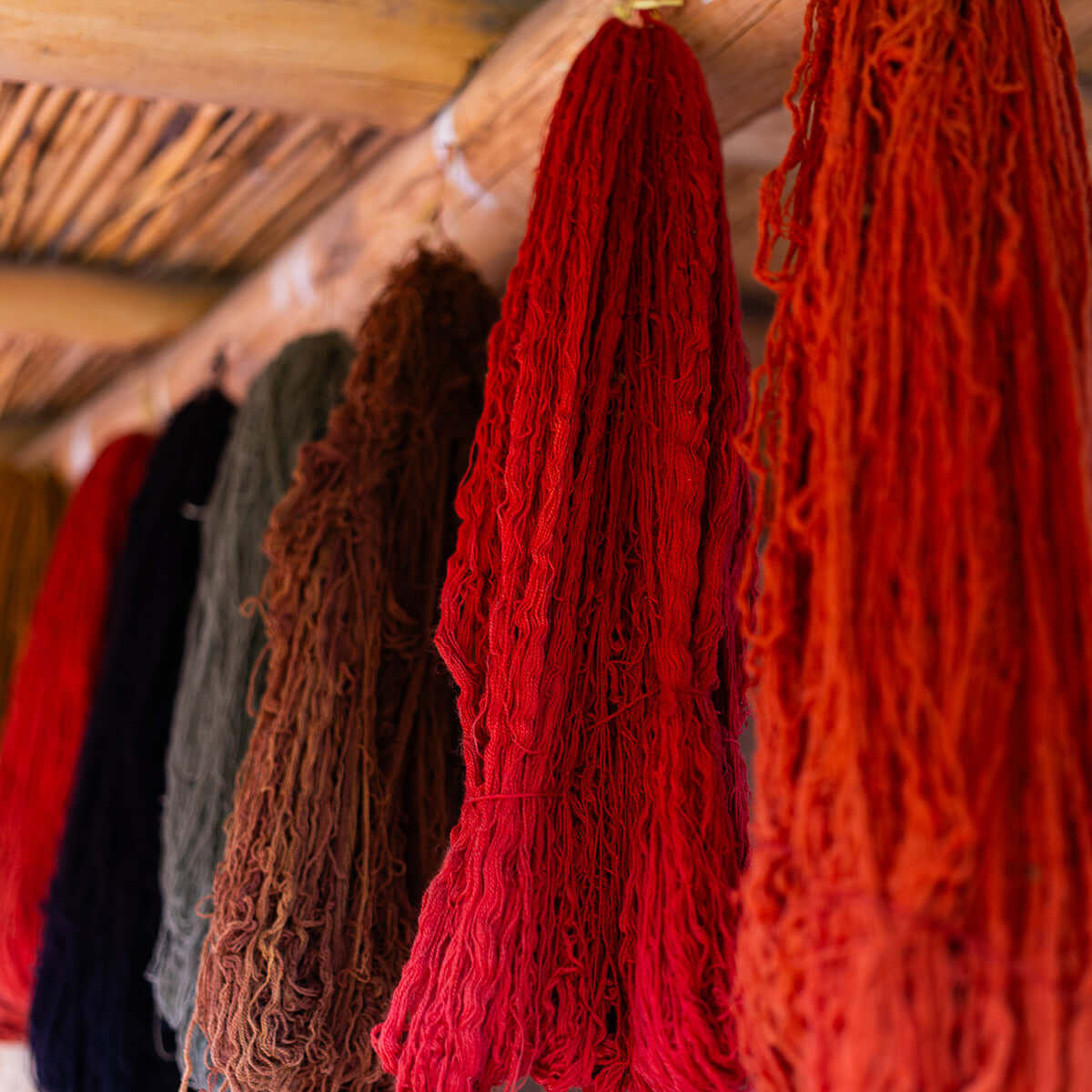
Made by hand in Peru. Designed in Australia.
Explore The Collection