



Frazada vs Kilim: What's the Difference?
They arrive in similar rooms. Both flat-woven. Both wool. Both with a geometry so considered it stops you mid-step. A frazada on the bedroom floor and a kilim on the living room sofa can feel like cousins from different continents — which is exactly what they are.
If you've found yourself drawn to both and not quite sure how to tell them apart, or which one is right for your space, here is the honest version.

What is a kilim?
A kilim is a flat-woven rug from the textile traditions of Turkey, the Caucasus, Central Asia, and the Middle East. The word itself is Turkish, and the technique — slit-weave tapestry — is one of the oldest textile structures in the world.
The defining characteristic of a kilim is how the colour blocks meet. In kilim weaving, each coloured section of weft is worked back and forth within its own area of the pattern. Where two colours meet, there is a small gap — a slit — because the threads do not interlock. That slit is the kilim's structural signature. If you look closely at an authentic kilim, you can see it: the hairline gap between a deep red and an indigo, the trace of the hand that laid each thread.
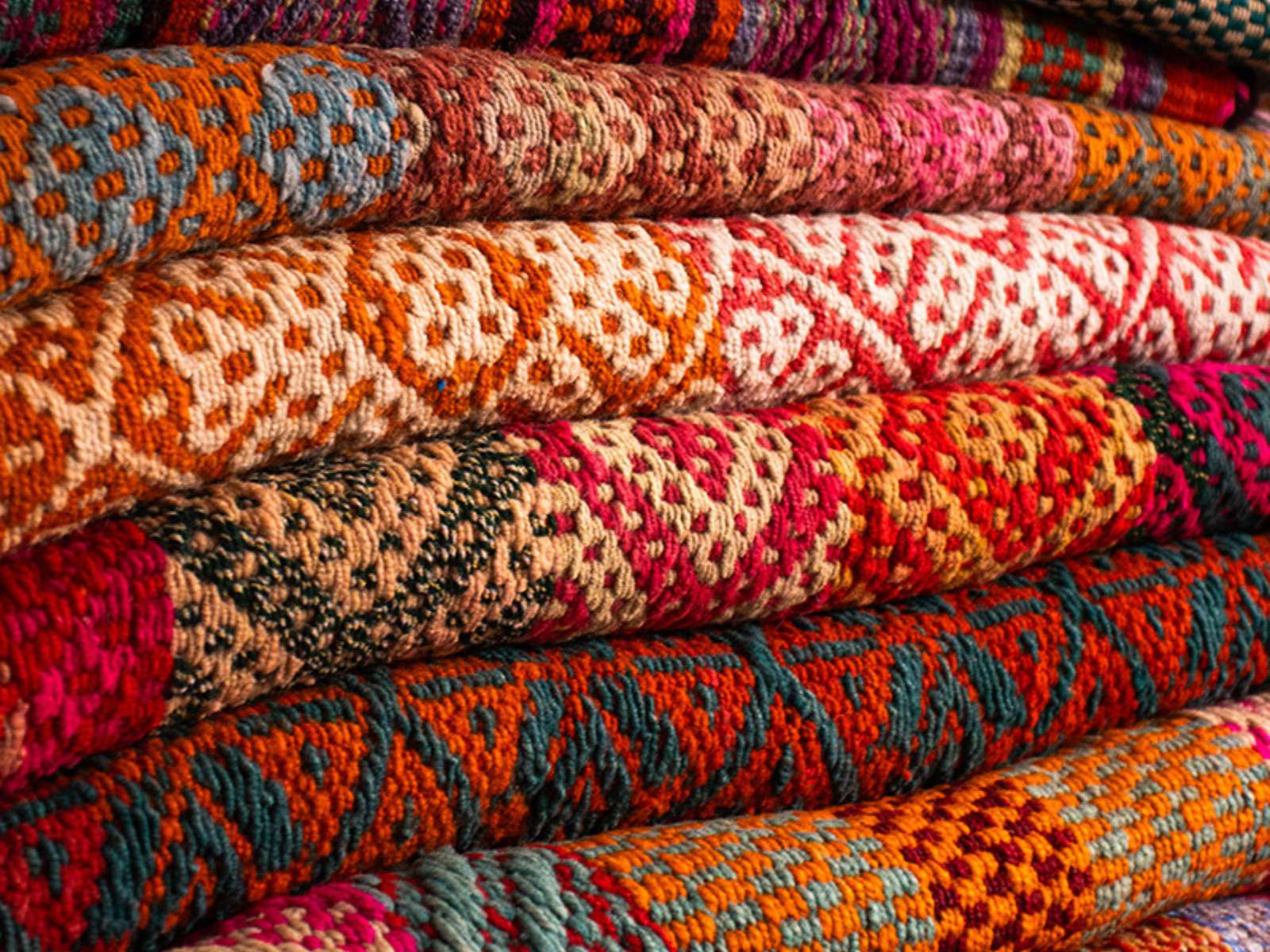
Kilim patterns are geometric and boldly articulated — diamond medallions, stepped triangles, stylised animals, prayer niches. The motifs carry meaning: tribal identity, protection, blessing, regional tradition. A kilim from eastern Anatolia reads differently from one made in Azerbaijan or Iran, even to an untrained eye. The pattern languages are distinct.
Kilims are woven on horizontal ground looms or frame looms, often wider and flatter than the textiles of the Andes. The result is typically thinner and more supple than a frazada — light enough to drape easily, with a clean flat face on both sides.
What is a frazada?
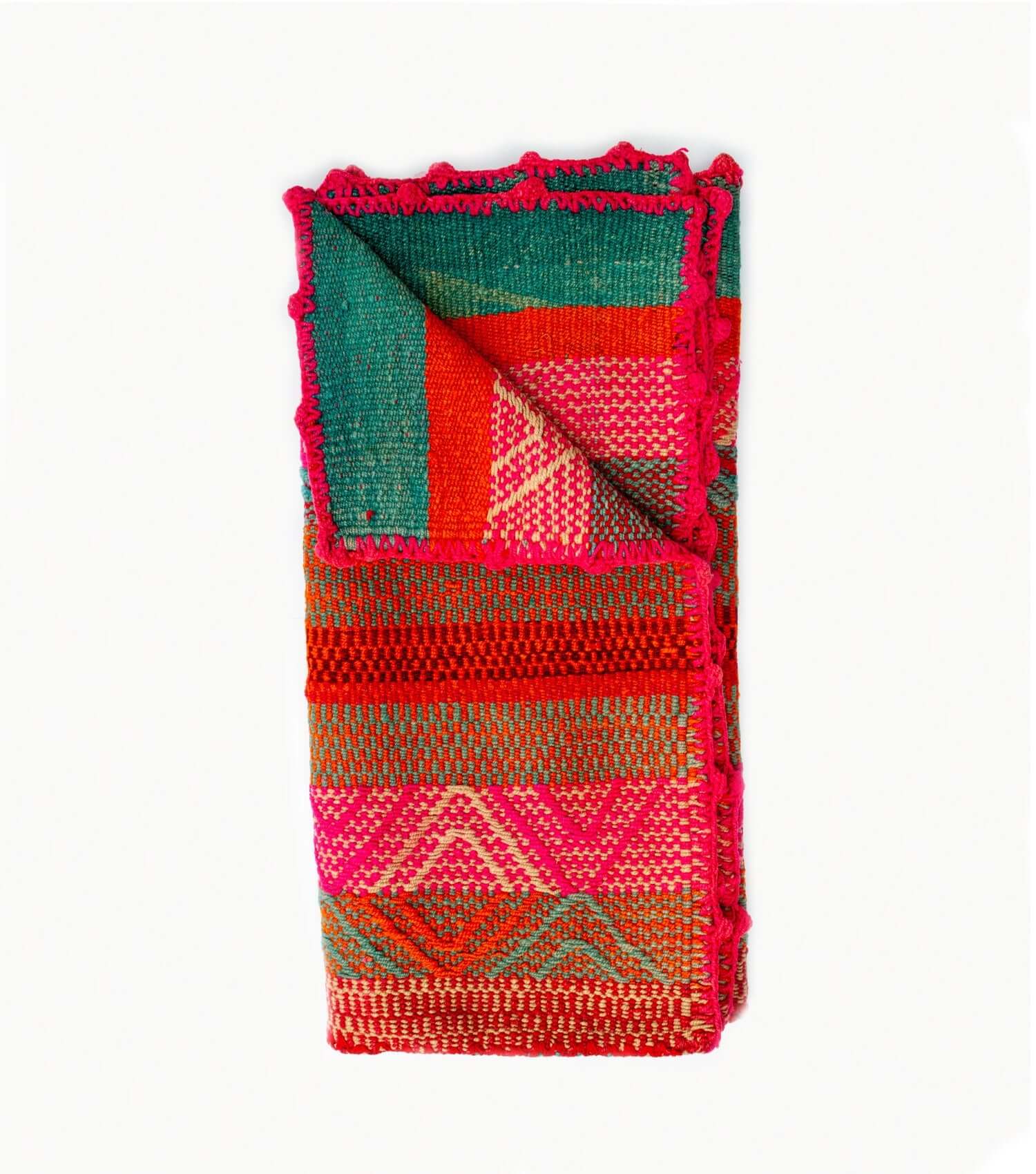
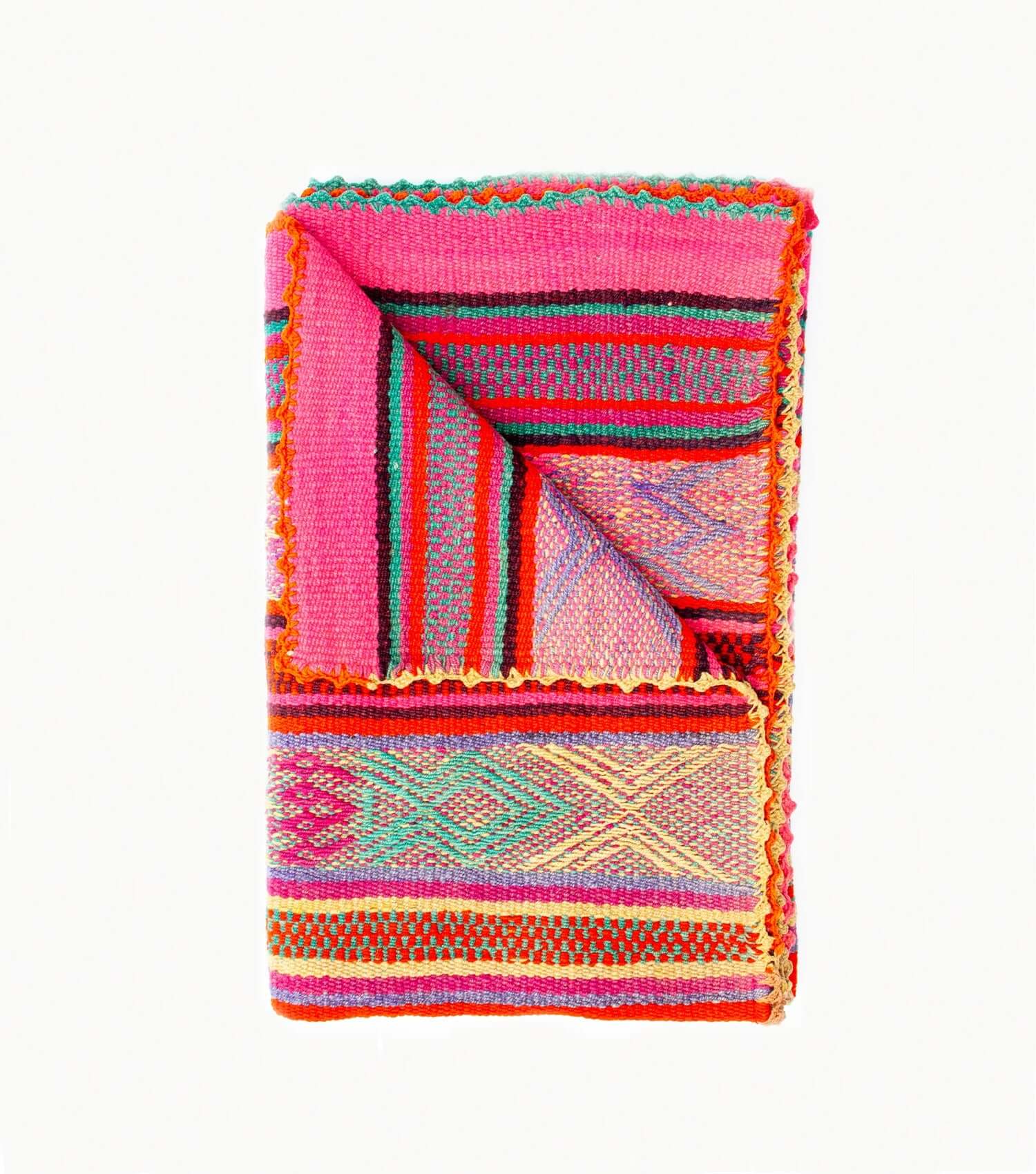
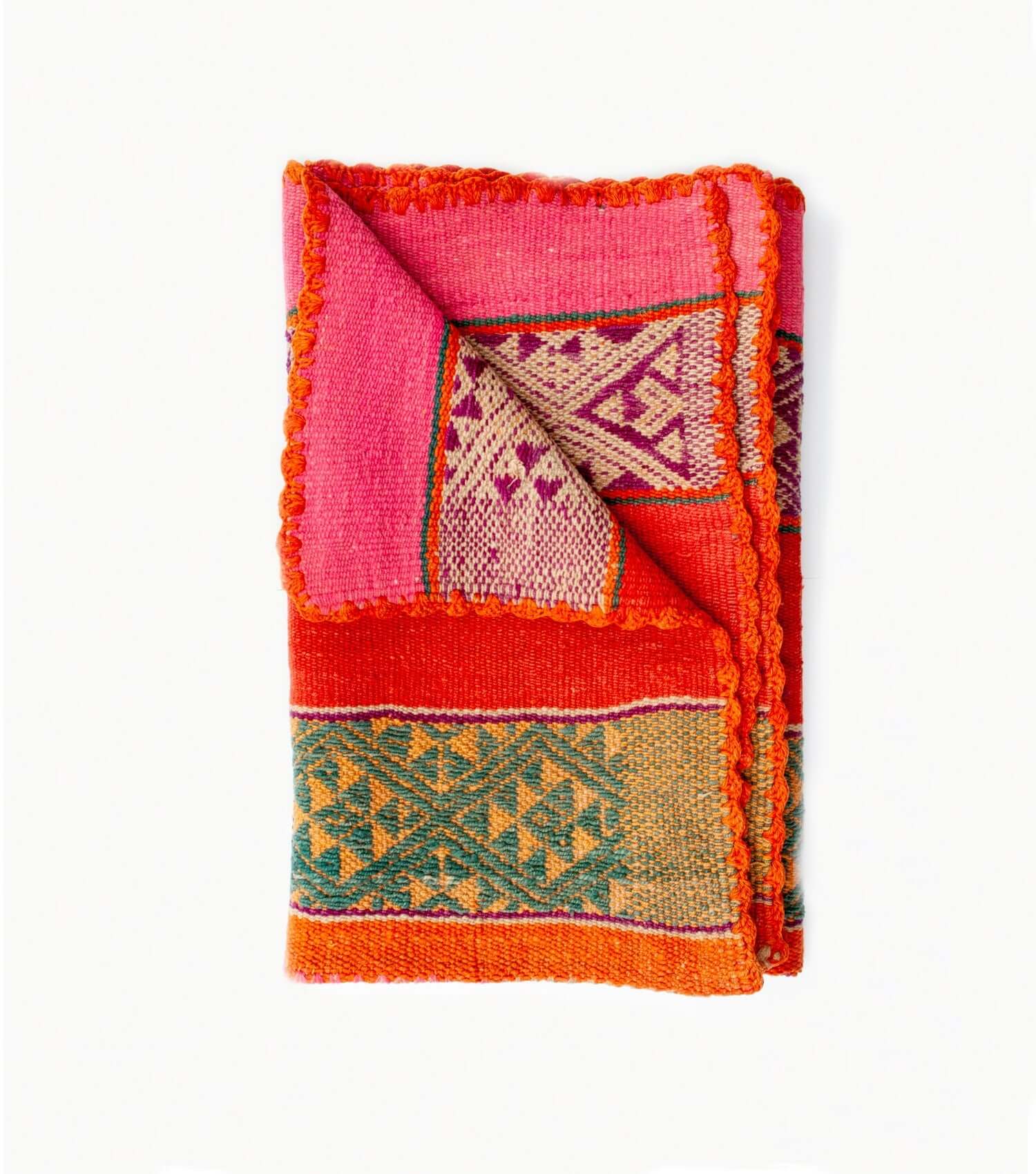
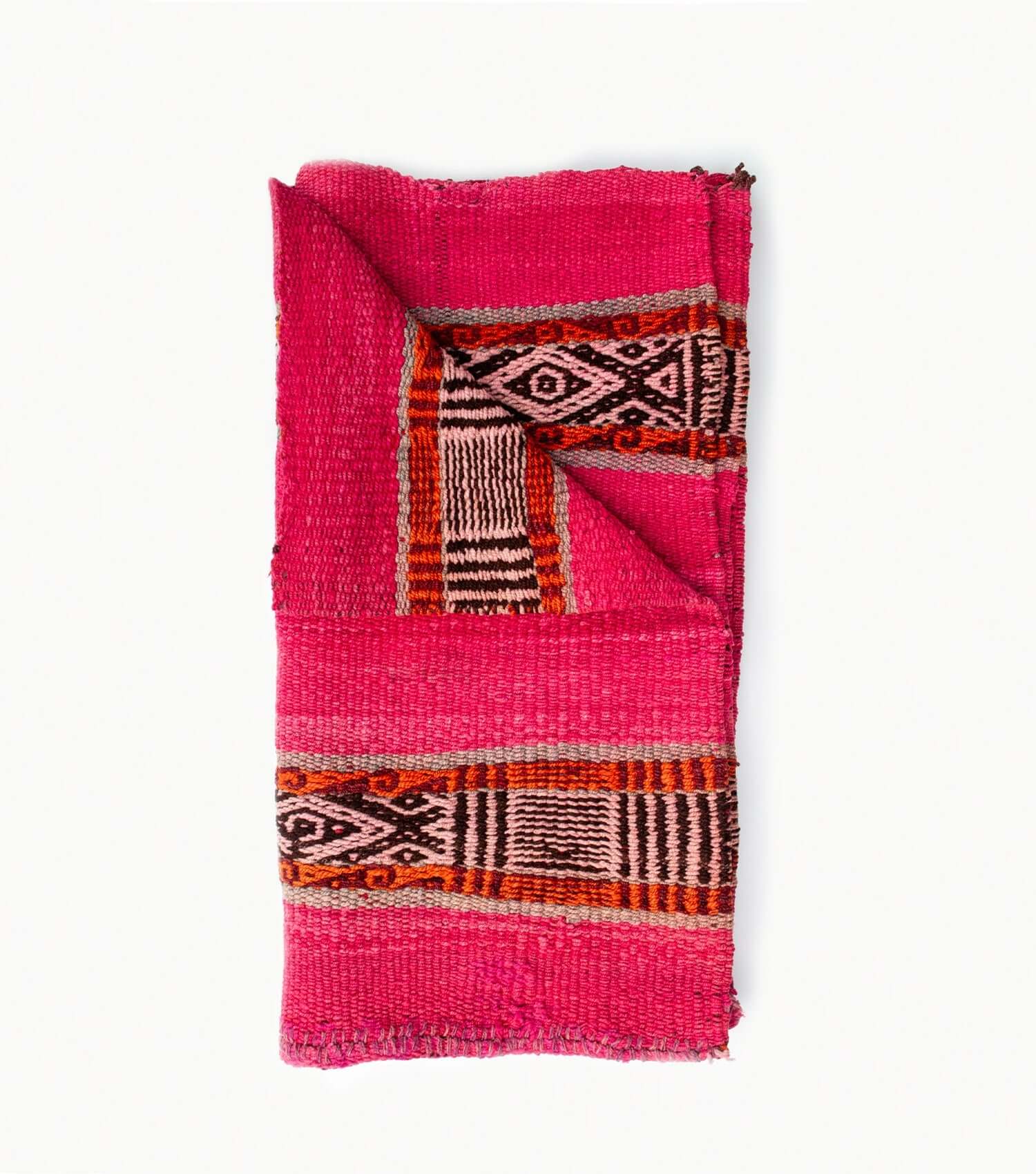
A frazada is a handwoven Andean blanket — made in the highlands of Peru and Bolivia from highland sheep wool, using techniques that have not changed for centuries.
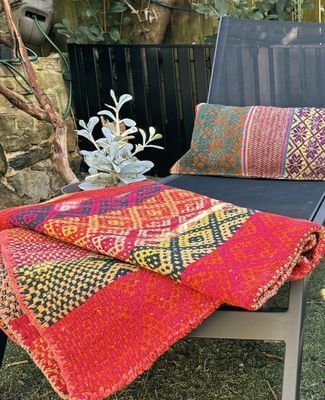
Where the kilim is a floor covering in origin, the frazada began as bedding. Heavy, dense, woven to hold warmth at altitude. The boldness of a frazada — the scale of the stripes, the saturated colour — was not designed for a room. It was designed for a person.
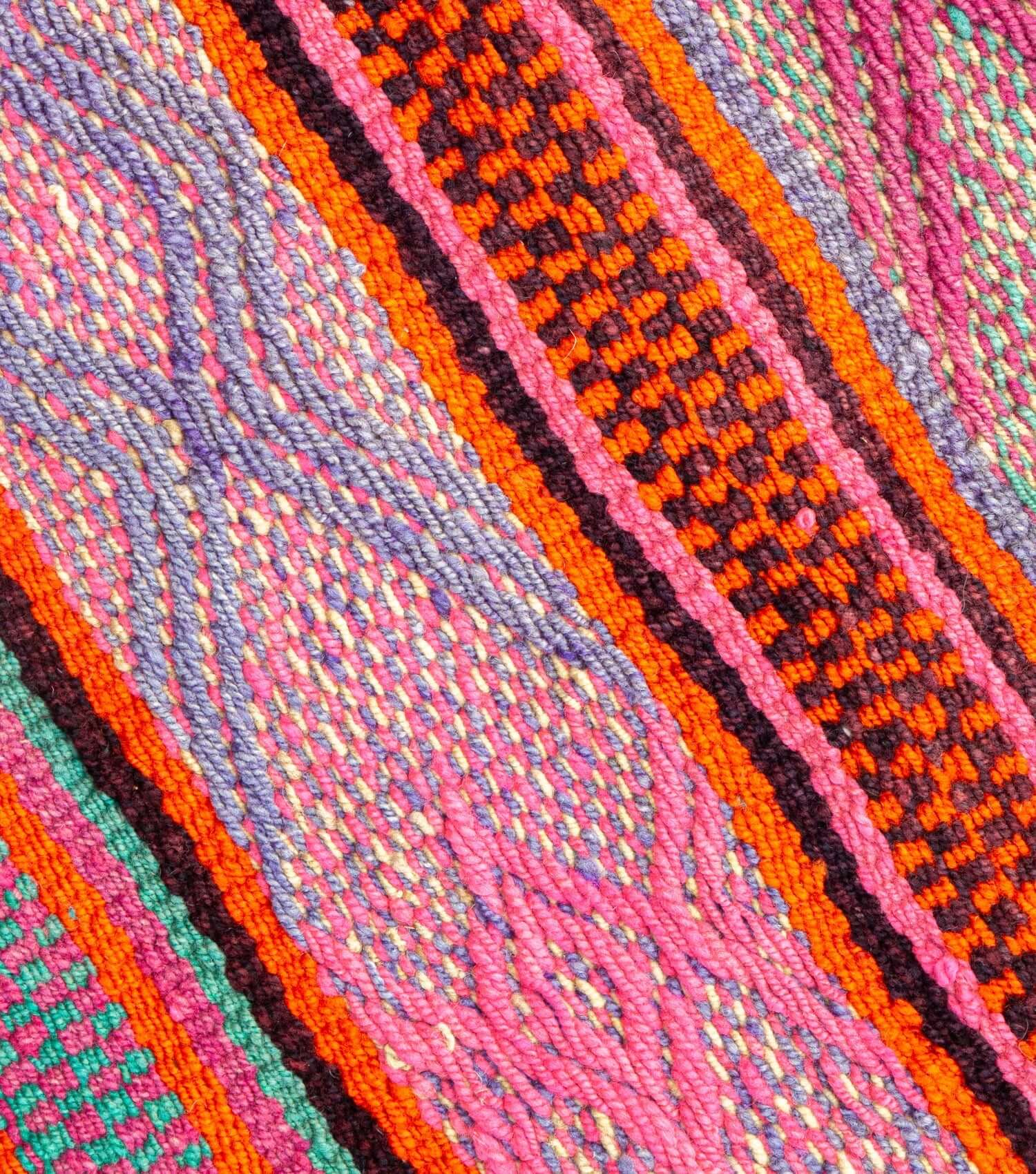
The weaving is done on a backstrap loom: two bars, a series of cords, and the weaver's own body as the tensioning mechanism. One end anchors to a post or tree; the other wraps around her waist. She leans back into it. The cloth is literally attached to the person making it, and the tension — the tightness of the weave — is controlled entirely through her body. It is as intimate as textile production gets.
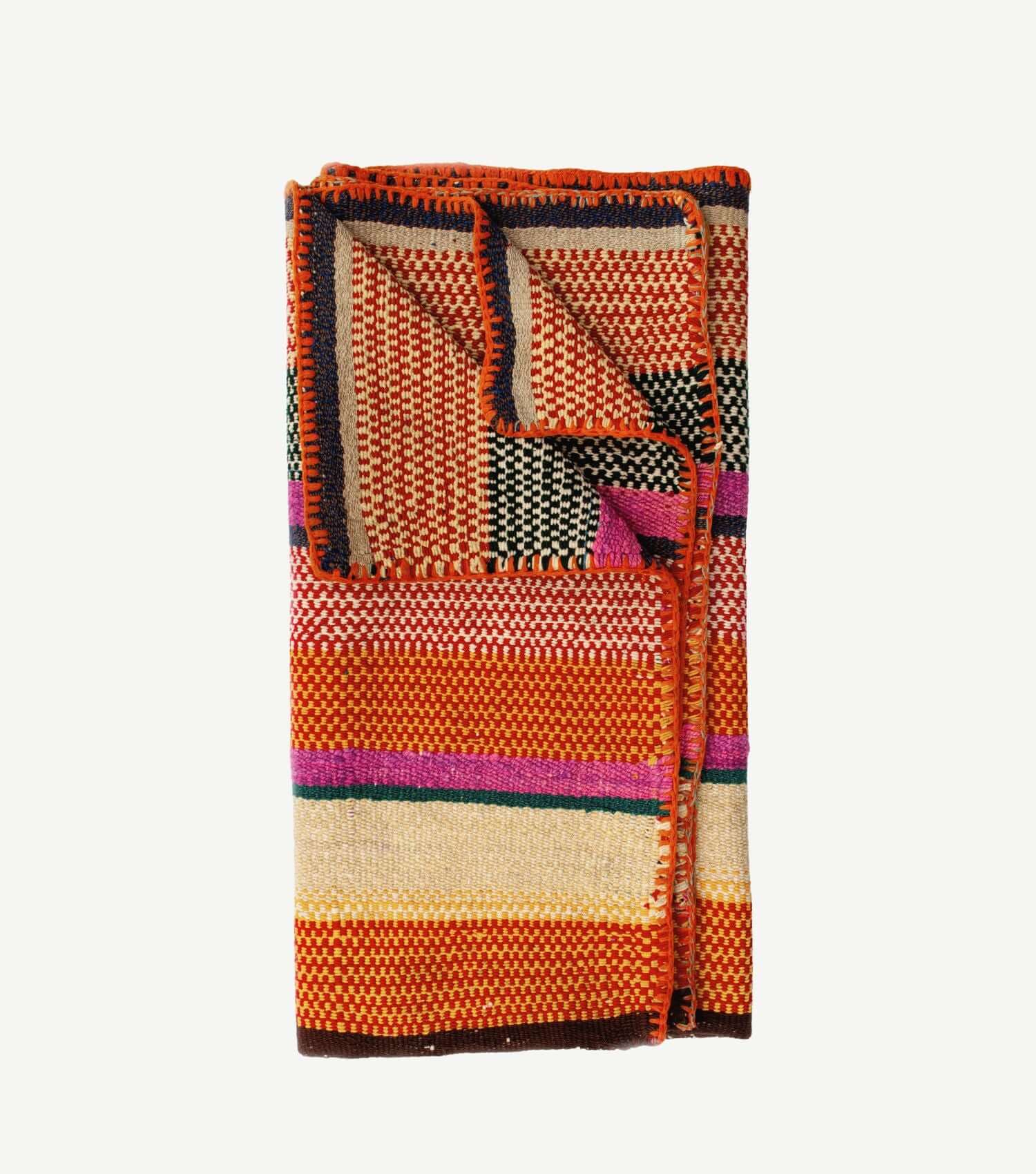
A frazada is woven in two halves. Each panel is taken to completion separately, then joined at the centre seam by hand. That seam is visible on every frazada — a record of the joining, not a flaw. It is also the reason no two frazadas are exactly alike. The dye batch changes between panels. The weaver's rhythm changes. The wool itself varies. You are looking at a document of a specific time and a specific person, not a repeatable pattern.
Read more about the full frazada story — the dyeing, the loom, the tradition — in From Andean Blanket to Everyday Object: The Frazada Story.

How are they different?
Origin
Kilims come from Turkey, Central Asia, the Caucasus, and the Middle East — a textile tradition that spans thousands of kilometres and dozens of distinct regional schools. Frazadas come from a specific geography: the altiplano, the high Andean plateau of southern Peru and Bolivia. The two traditions have no connection. They arrived at similar aesthetics — bold geometry, flat weave, saturated wool — through entirely separate histories.
Weave structure
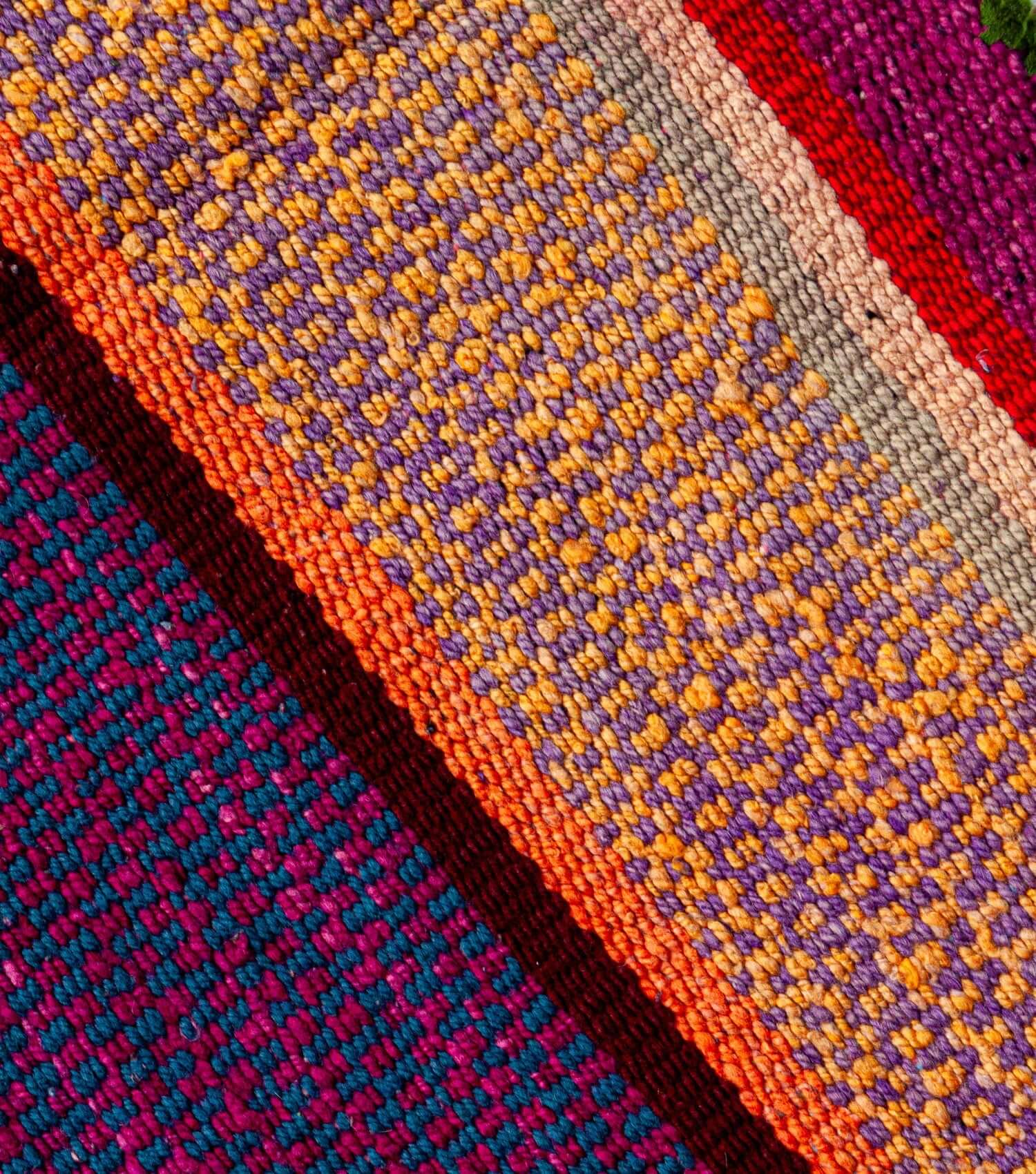
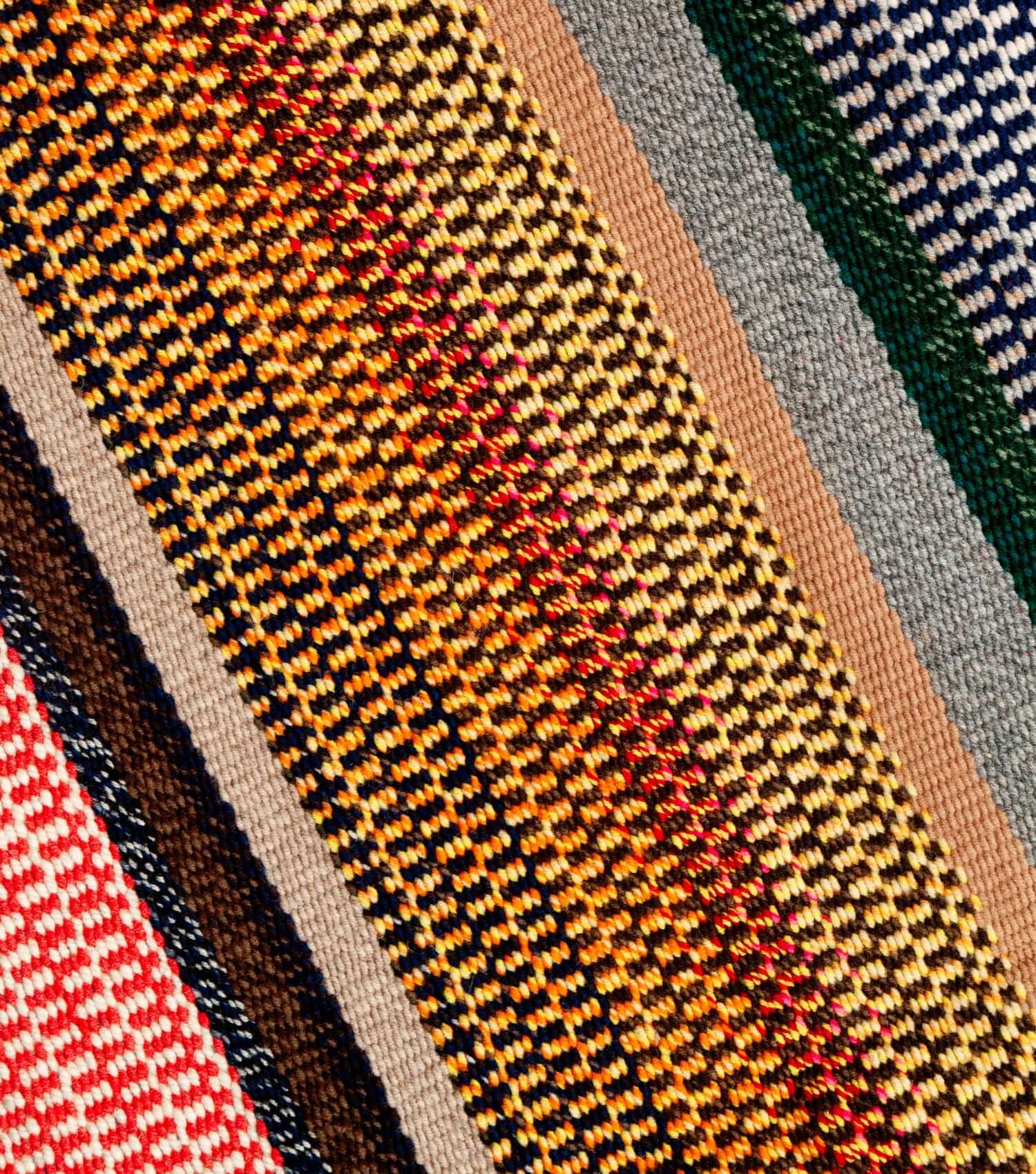
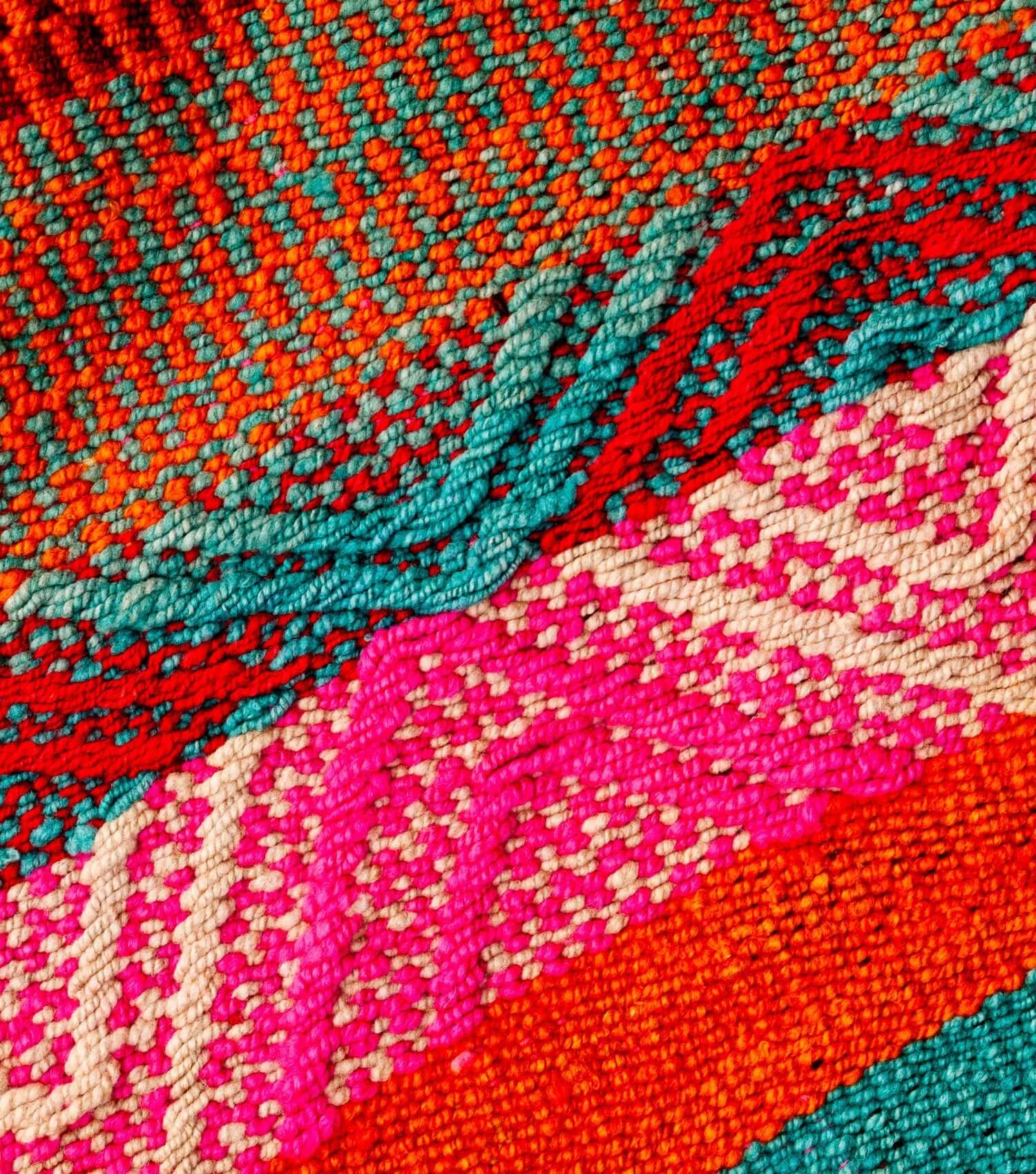
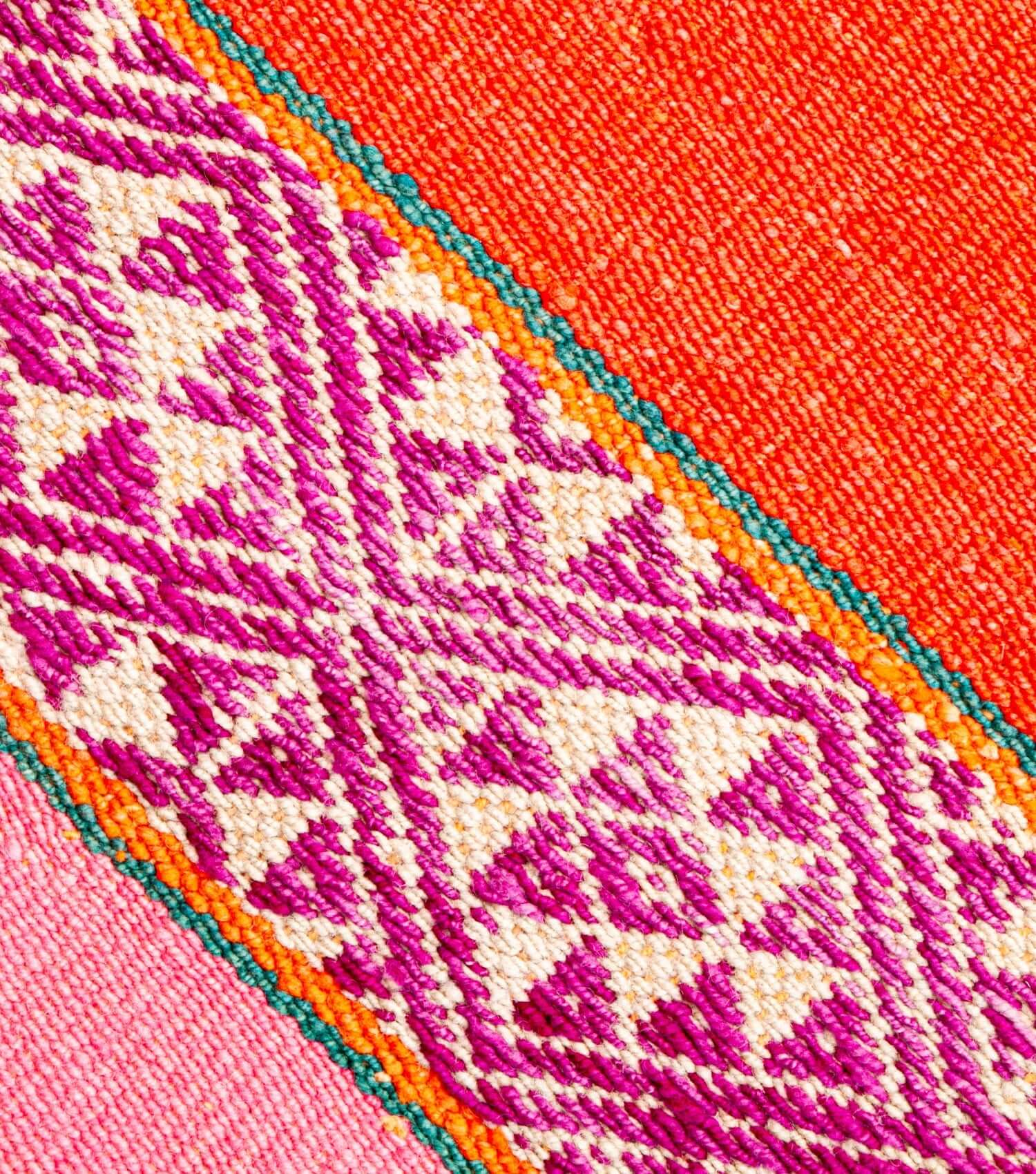
The kilim's slit-weave tapestry and the frazada's backstrap plain weave produce different surfaces. A kilim sits flat and even, with that characteristic slit at the colour transitions. A frazada has more body — the weft-faced weave packs the threads tightly together, creating a dense, heavy textile that holds its shape.
Weight and handle
Pick up a kilim and a frazada of the same size and you will immediately feel the difference. The frazada is heavier. This is not a quality difference — it is a purpose difference. Kilims were designed as floor coverings and portable furnishings. Frazadas were designed as blankets against Andean cold. That weight is what they were built for.
Pattern language
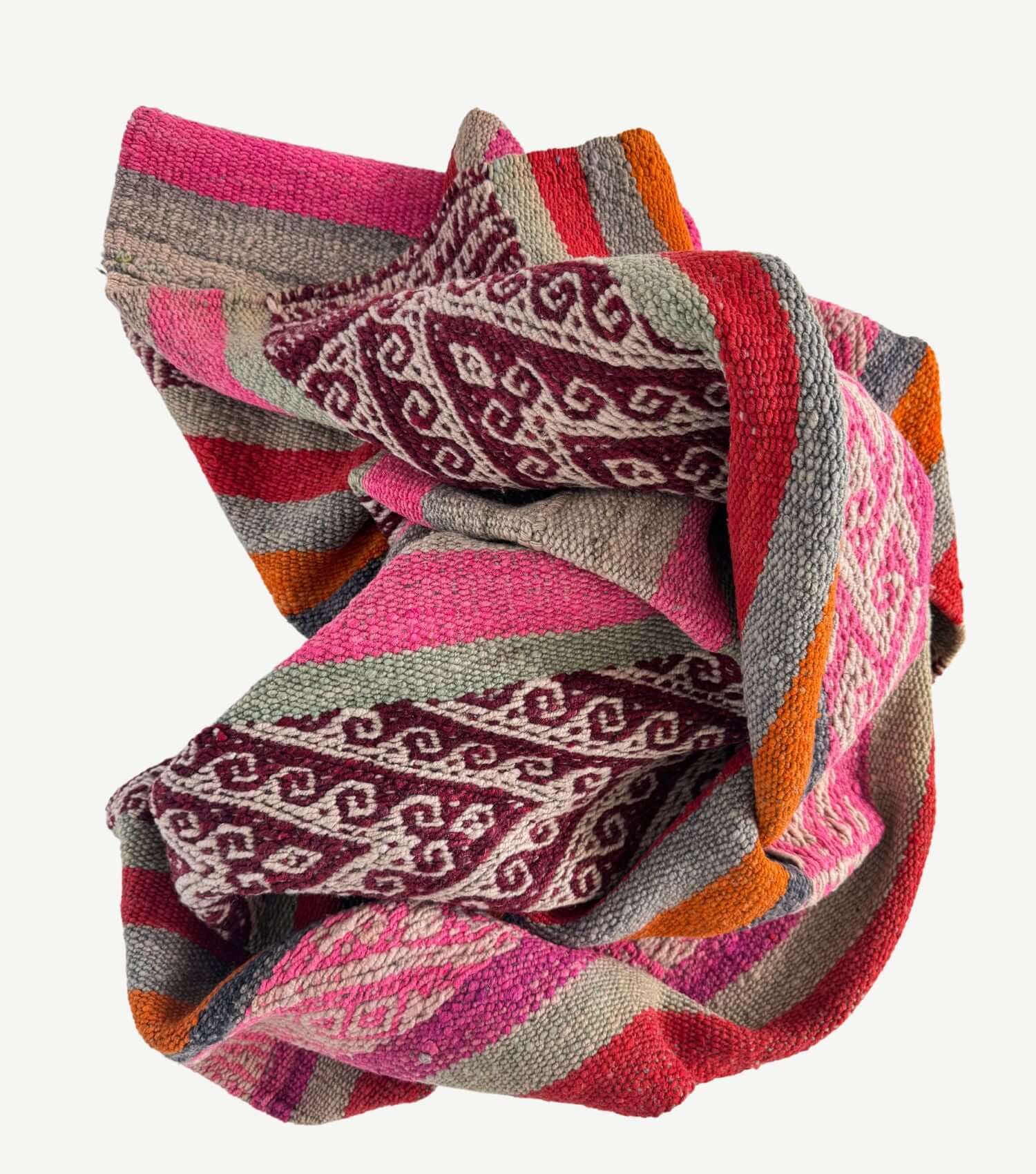
Both are geometric, but the grammar is completely different. Kilim motifs — medallions, arabesques, the hooked diamond, the prayer niche — belong to an Islamic decorative tradition and carry specific cultural references. Frazada patterns are Andean: bold horizontal stripes, stepped diamonds, strong colour contrasts that reflect the palette of the highland landscape. Neither is trying to be the other.
Colour
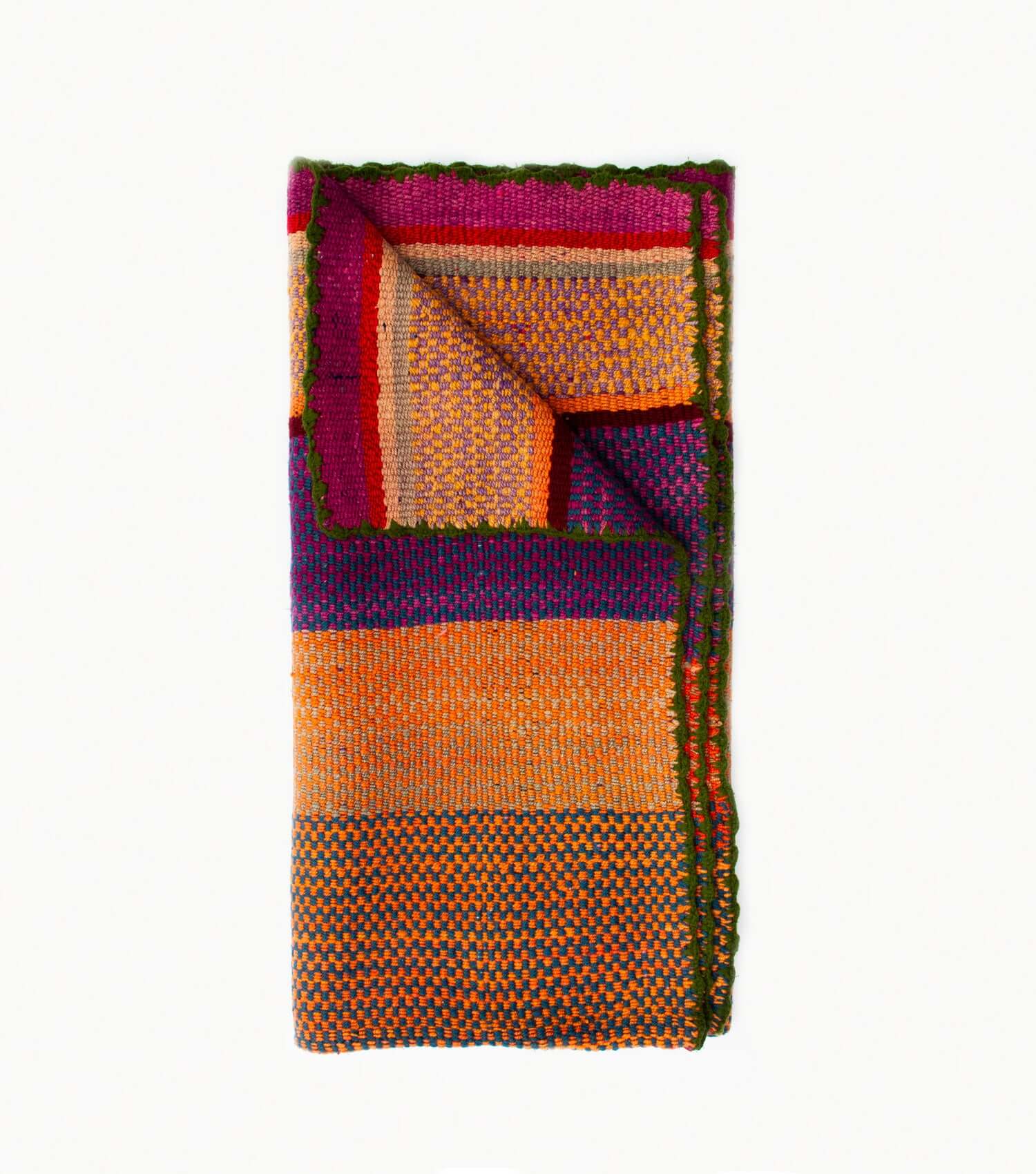
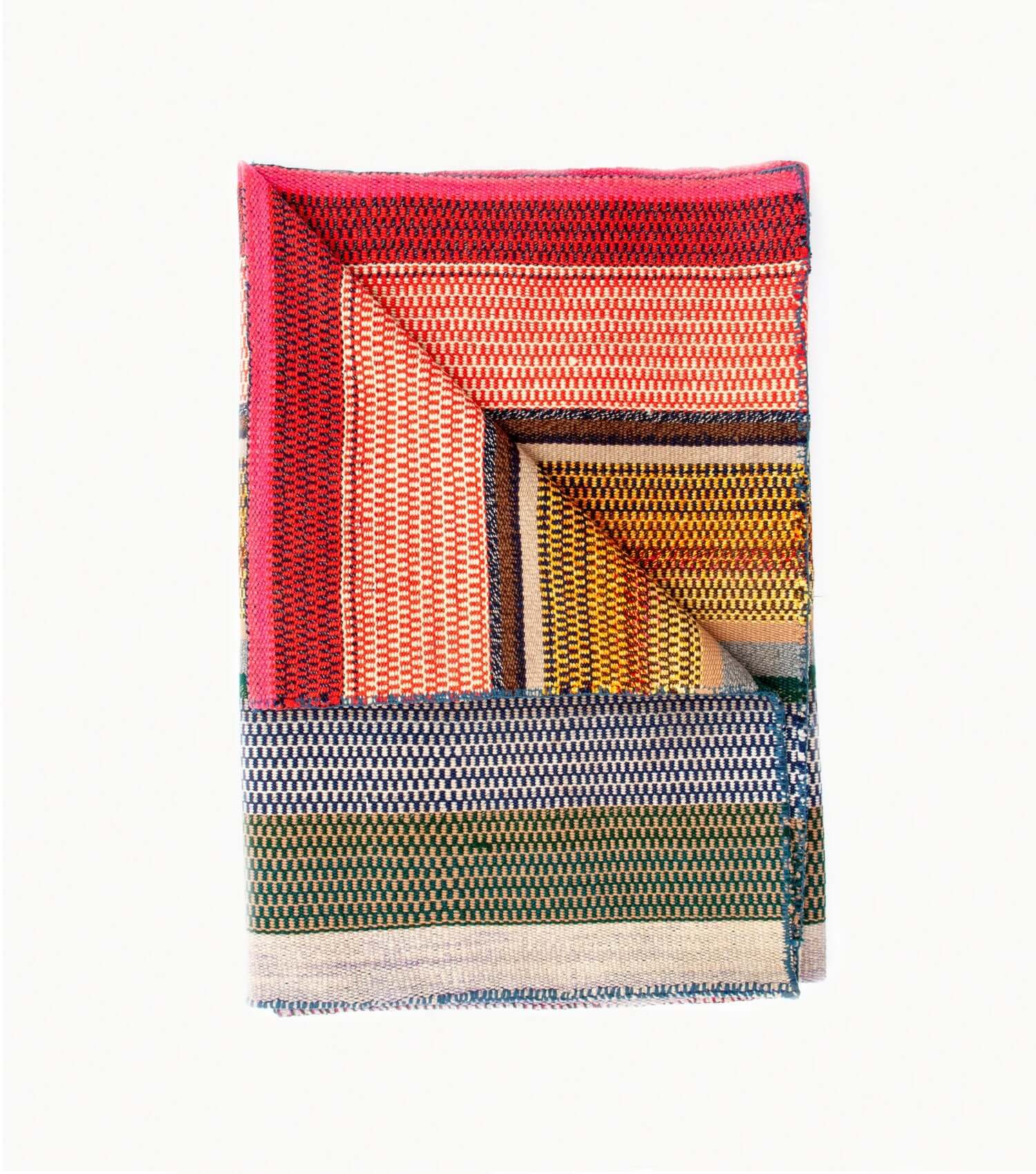
Both traditions historically used natural dyes — and the best examples of both still do. Kilim reds often come from madder; frazada reds from cochineal — the dried body of a small insect that feeds on prickly pear cactus. Both traditions use indigo for blue. What differs is the palette logic: kilim colours tend toward the jewel-toned and complex, working colour against colour in small mosaic-like units. Frazada colours are bolder and more declarative — a stripe of deep red, then cream, then forest green, held across the full width of the textile.
Availability and reproduction
Kilims are widely reproduced. Machine-woven kilim-style rugs are sold by large homewares retailers; hand-woven versions are available from dozens of sources at a range of prices. Authentic vintage kilims exist in good supply. Vintage frazadas — the kind that were actually woven by an Andean weaver for use in her own home — are much rarer in international markets. There is no large-scale frazada reproduction industry. What exists is mostly what was made.
Which one works in your space?
Both are genuinely beautiful. The choice is really about what feeling you want and what the room already holds.
A kilim brings a sense of accumulated history — the layered geometry, the worn palette of the best vintage pieces, the sense of a tradition that has crossed cultures and centuries. It works in rooms with a collected, eclectic feeling: multiple textiles, warm plaster walls, mismatched chairs that somehow work together. A kilim can hold a room without dominating it.
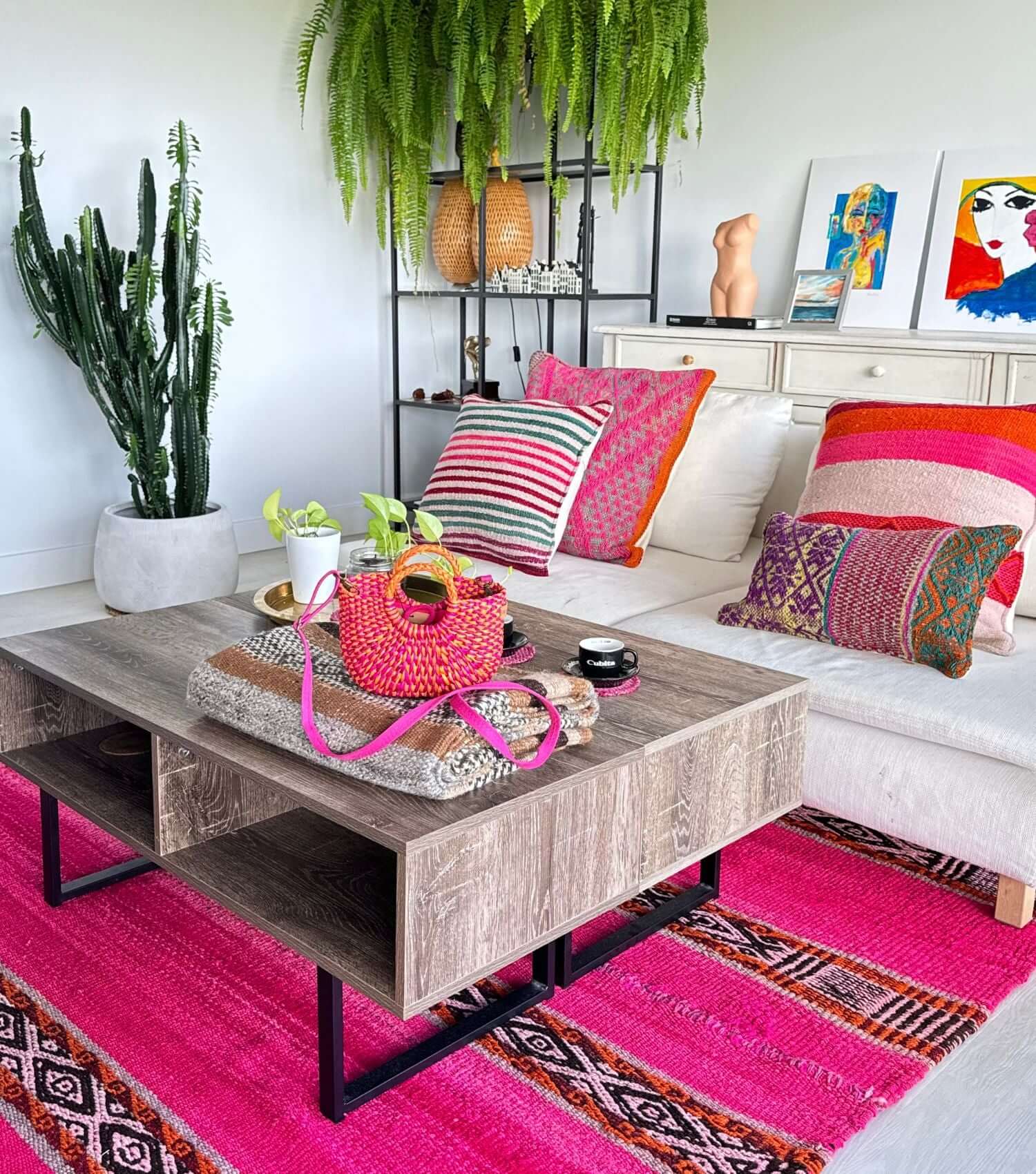
A frazada is bolder, more declarative. The stripe is hard to ignore — and that is the point. In a room that needs a focus, a frazada provides it. In a room that already has a lot happening, a frazada might be too much. In a room that is spare — white walls, one sofa, good light — a frazada is exactly right.
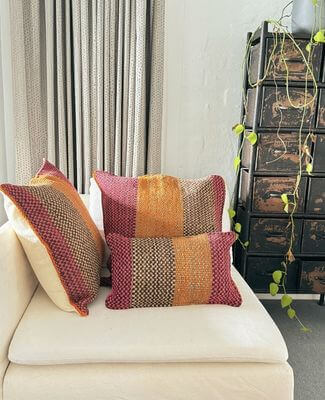
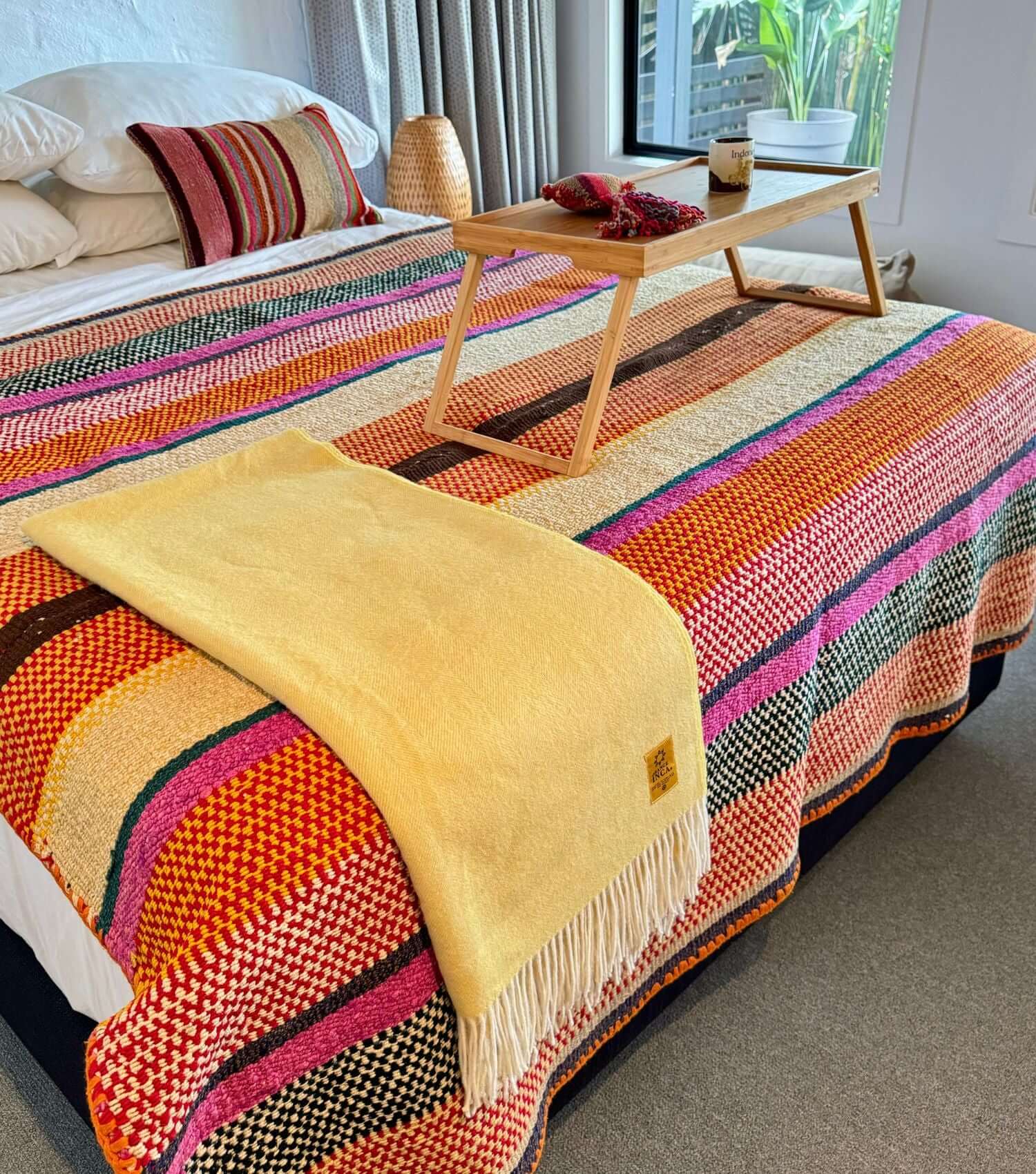
The other consideration is format. Kilims are almost always used as rugs or wall hangings. Frazadas are more versatile — as a rug, yes, but also draped over a sofa arm as a throw, folded at the foot of a bed, taken outside on a warm afternoon. The weight that makes a frazada heavy underfoot is also what makes it satisfying to wrap around your shoulders on a cool evening. It is a dual-purpose object in a way that a kilim rarely is.
One more difference worth knowing
Most kilims — even beautiful vintage ones — can be replaced. There are more where they came from. The same design or something very close to it exists somewhere.
A frazada cannot be replicated. The specific colour, the specific pattern, the specific weaver — that combination happened once. Orange Inca works with vintage frazadas: textiles that were already made and used before we found them. When one is gone, it is gone. That is not a sales line. It is simply the nature of the object.
It is also, if we are honest, part of the appeal.
Explore the full frazada collection — rugs, cushion covers, and the frazada bag range — at orangeinca.com.



Leave a comment
This site is protected by hCaptcha and the hCaptcha Privacy Policy and Terms of Service apply.