

Baby Alpaca vs Cashmere: A Practical Guide to Luxury Fibres
Baby alpaca or cashmere — it's the comparison people make most often, and the answer is clearer than the fibre marketing suggests. Cashmere is marginally finer in the hand: a lighter, cloud-like quality that made it the benchmark for luxury knitwear for decades. Baby alpaca is warmer for its weight, regulates better — warm when it's cold, never stifling when it isn't — holds its surface in regular wear, and pills far less. If you're choosing something to live in — a shawl, a wrap, a throw — baby alpaca is the more forgiving fibre over time, and over more of the year. If you want the featheriest handle and are prepared to look after it carefully, cashmere has it.
Below are the questions people actually ask about the two fibres, answered directly, with the numbers.
Is baby alpaca warmer than cashmere?
Yes. Baby alpaca is warmer than cashmere at the same weight, and the reason is the structure of the fibre, not the thickness of the yarn. Each alpaca fibre has a partly hollow core — small air pockets running along its length. Those pockets trap warmth, which gives baby alpaca a better warmth-to-weight ratio than cashmere. A 190g baby alpaca shawl handles a cold Sydney morning, a cooler Melbourne evening, and everywhere in between.
Cashmere is denser. That density is what gives it the cloud-like handle it's known for — but it insulates less efficiently per gram. To match the warmth of a baby alpaca piece in cashmere, you'd need a heavier garment. In a real winter — a Dutch January, a Canadian February — that difference shows up as a lighter layer doing the work of a heavier one.
The part people miss is that "warmer" is only half of it. Those same air pockets let the fibre breathe, so baby alpaca regulates rather than simply insulating. It holds warmth in when the air is cold and lets it out when the air isn't — you don't overheat, you don't sweat into it, and you don't get that trapped feeling a dense knit gives you the moment you walk indoors. Cashmere insulates well; it regulates less. That is the difference that matters in a climate where the temperature swings fifteen degrees in a day.

What is the difference between baby alpaca and cashmere?
Fineness is measured in microns — the diameter of a single fibre. The lower the number, the finer and softer the fibre. Here is where each one sits.
| Fibre | Typical fineness | What it means in the hand |
|---|---|---|
| Vicuña | 12–13 microns | The finest natural fibre there is. Wild animal, shorn once every two to three years. |
| Cashmere | 14–19 microns | Very fine, cloud-like handle. Short fibres, so it pills. |
| Royal alpaca | Under 19 microns | The finest grade of alpaca — a small fraction of any clip. |
| Baby alpaca | 19–22.5 microns | Fine enough to wear against skin. Longer, stronger fibre than cashmere. |
| Superfine alpaca | 22.5–25.5 microns | Good everyday knitwear; some people notice it against bare skin. |
| Standard alpaca | 26 microns and up | Outerwear, blankets, rugs. |
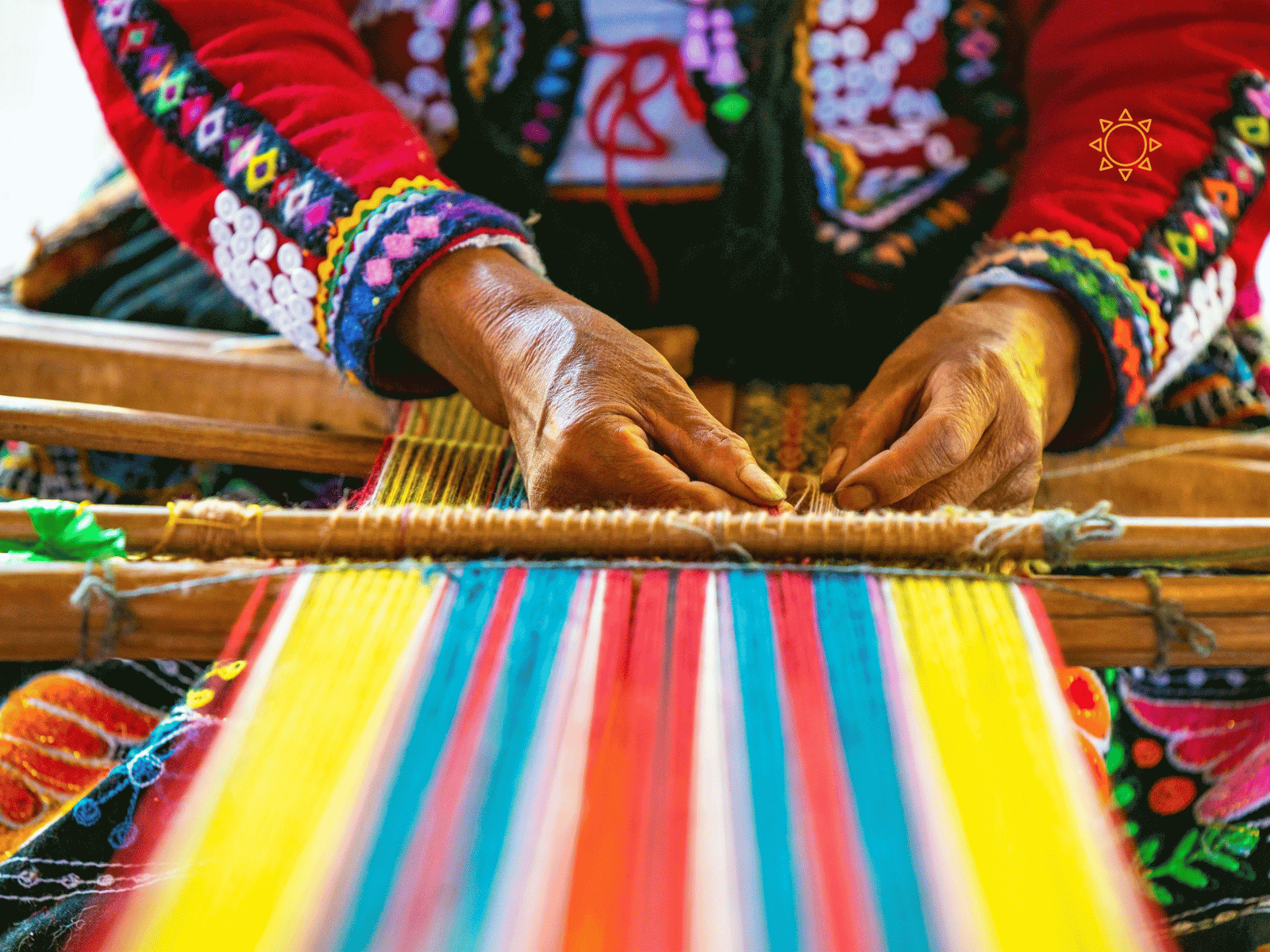
"Baby alpaca" is a fibre grade, not the age of the animal. It can come from a first shearing or from an adult with particularly fine fleece; the micron count is what qualifies it. Peru holds around 80% of the world's alpaca population, and the country's altitude, climate and accumulated knowledge make it the primary source of quality alpaca fibre.
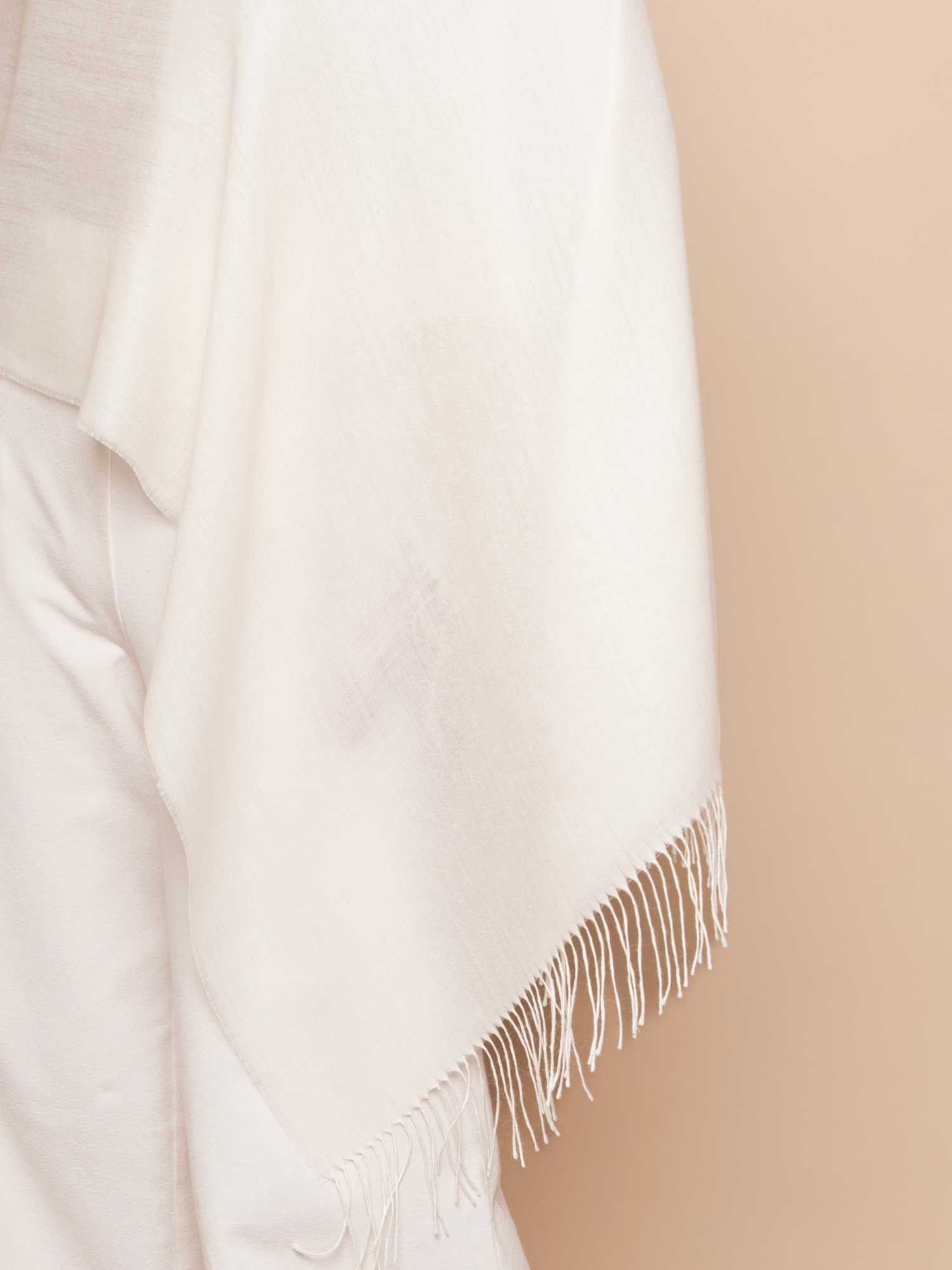
The other structural difference is fibre length. Cashmere is a short fibre, which is why it pills. Alpaca is long, which is why a baby alpaca shawl worn for five years will look materially better than a cashmere one worn the same way. And alpaca carries no lanolin — the wax in sheep's wool that many people react to — so it lies smooth against skin rather than catching at it.
What are the downsides of alpaca wool?
There are three, and they are worth knowing before you buy.
It has less stretch. Sheep's wool has a natural crimp — a zig-zag in the fibre that works like a spring, so a wool jumper stretches and snaps back. Alpaca is straighter and smoother. A baby alpaca knit drapes rather than springs back, and a fitted piece that is stretched hard can grow at the cuffs and hem. This is why we store knitwear folded, never on a hanger, and why our jumpers are cut relaxed rather than tight.
It sheds a little at first, and can pill where it rubs. A loosely spun baby alpaca knit will release some loose fibre in the first few wears — that is the ends of long fibres working free, and it stops. Pilling is far lower than cashmere, but it can happen at friction points: under a bag strap, at the cuff against a desk. A fabric comb takes it off.
The price. Quality baby alpaca costs about the same as quality cashmere. It is not a cheaper substitute. It is a fibre that lasts longer at a similar price.
One claim you will read elsewhere doesn't hold: that alpaca demands strict hand-washing. It needs far less cleaning than most people expect. Alpaca has no lanolin, so it holds less dirt and smell, and a shawl usually just needs airing overnight between wears. When a piece really needs a clean, follow the label — ours say dry clean — and take it to a dry cleaner, about once a season. The care routine is lighter than cashmere's, not heavier — the detail is in our shawl care guide and jumper care guide.

Is alpaca itchier than cashmere?
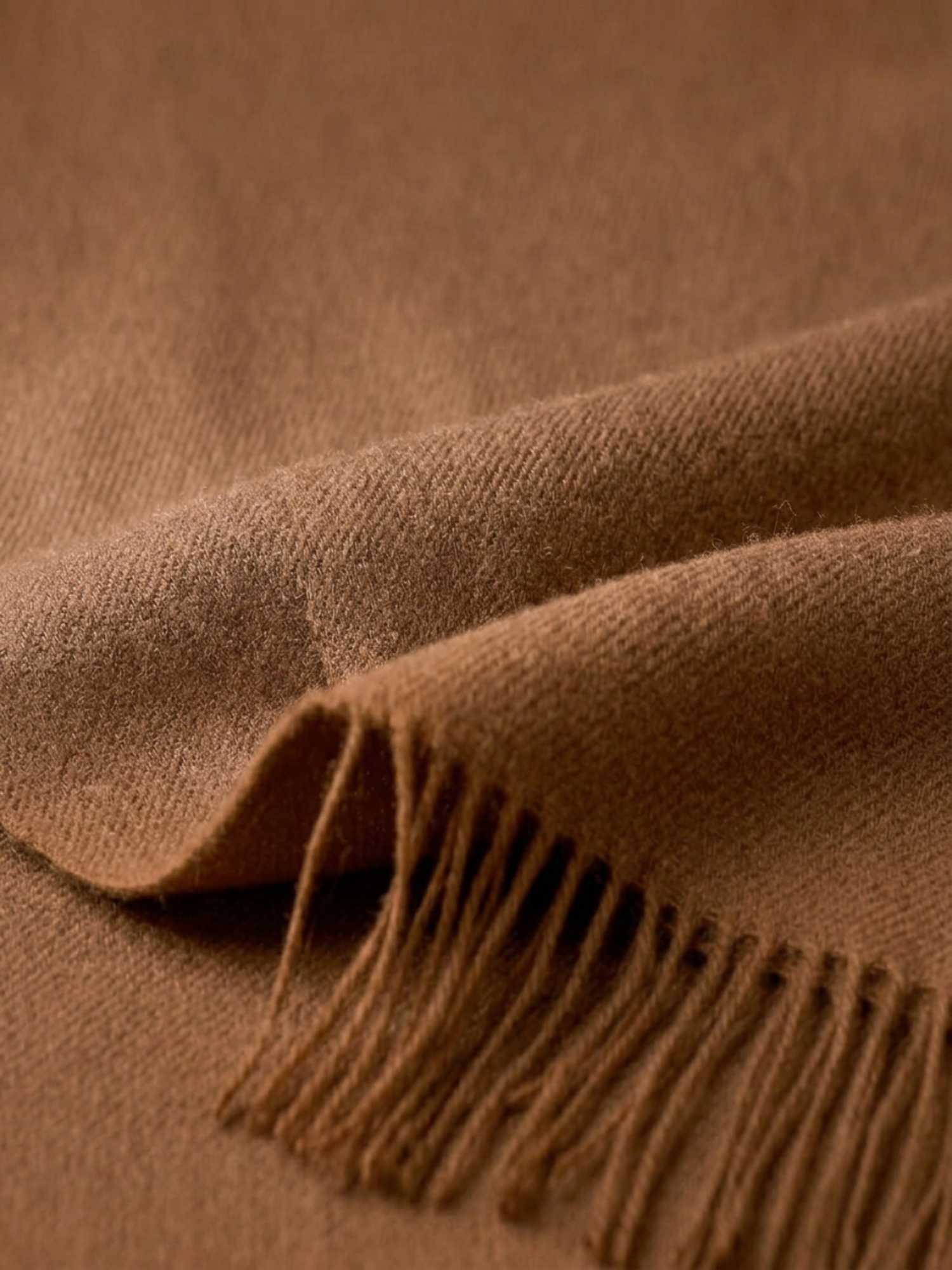
No — provided it is baby alpaca. The prickle people associate with wool comes from two things: coarse fibre ends poking the skin, and lanolin. Baby alpaca is under 22.5 microns, below the threshold where most people feel prickle, and it carries no lanolin at all. The scales on an alpaca fibre are also lower and smoother than on sheep's wool, so the surface feels slick rather than fuzzy. If you've avoided wool your whole life, baby alpaca is often the exception.
Standard alpaca — 26 microns and up — is a different matter. It is a fine fibre for a coat or a rug, and some people will notice it against bare skin. The grade is the whole point. If a label says "alpaca" without a grade, ask.
Is cashmere or alpaca more expensive?
At the quality we work with, they sit at similar prices. A baby alpaca shawl and a good cashmere shawl are within the same range; the same is true of jumpers. Where the two part ways is over time: the cashmere piece pills and thins with wear, the baby alpaca piece keeps its surface. Cost per year of wear favours alpaca.
Royal alpaca — the finest few percent of the clip — is priced closer to top-grade cashmere. Vicuña is in another league entirely, and is discussed below.
Is alpaca wool too hot for summer?
Not in the weights we make. Because the fibre breathes and regulates rather than trapping heat statically, it adapts to the temperature around it — insulating in the cold, and not smothering you when the afternoon warms. This is why baby alpaca suits Australia particularly well. You don't need a Scandinavian winter to get value from it. You need a climate where mornings are cool, afternoons are unpredictable and you want one piece that handles both — which describes Sydney, Melbourne and most of the coast for at least half the year.
Weight matters more than fibre. A fine woven shawl and a brushed throw are very different propositions in the same fibre. A lightweight shawl or wrap layers comfortably across a Sydney autumn, a cool Brisbane evening or a mild winter morning anywhere along the coast. A heavier knit or throw is built for the coldest part of a Melbourne or Canberra winter, or for a northern-hemisphere one. The fibre regulates; the construction sets how much warmth you start with.
Can you wear baby alpaca in spring and summer?
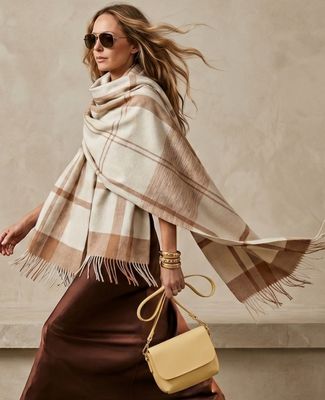
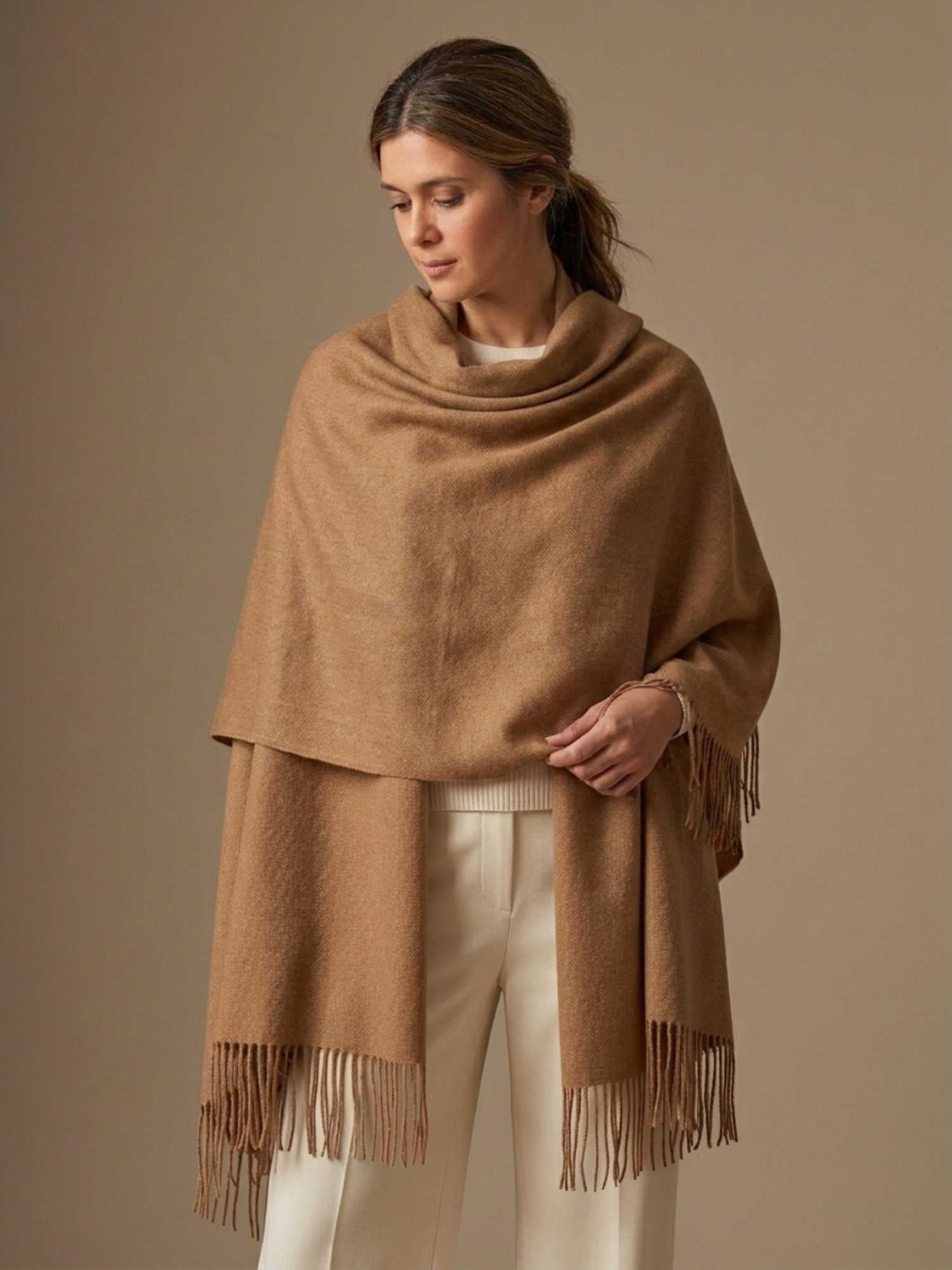
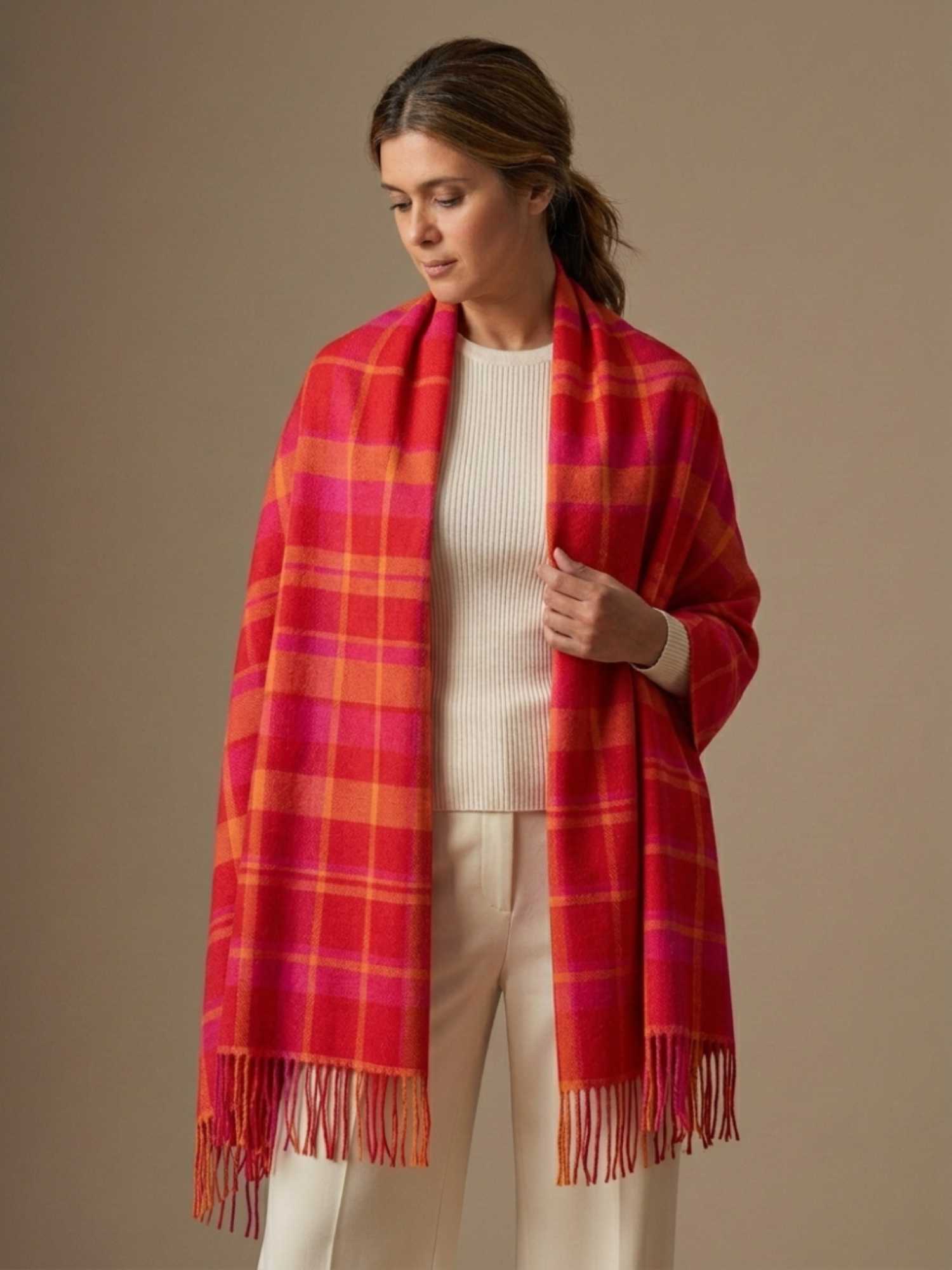
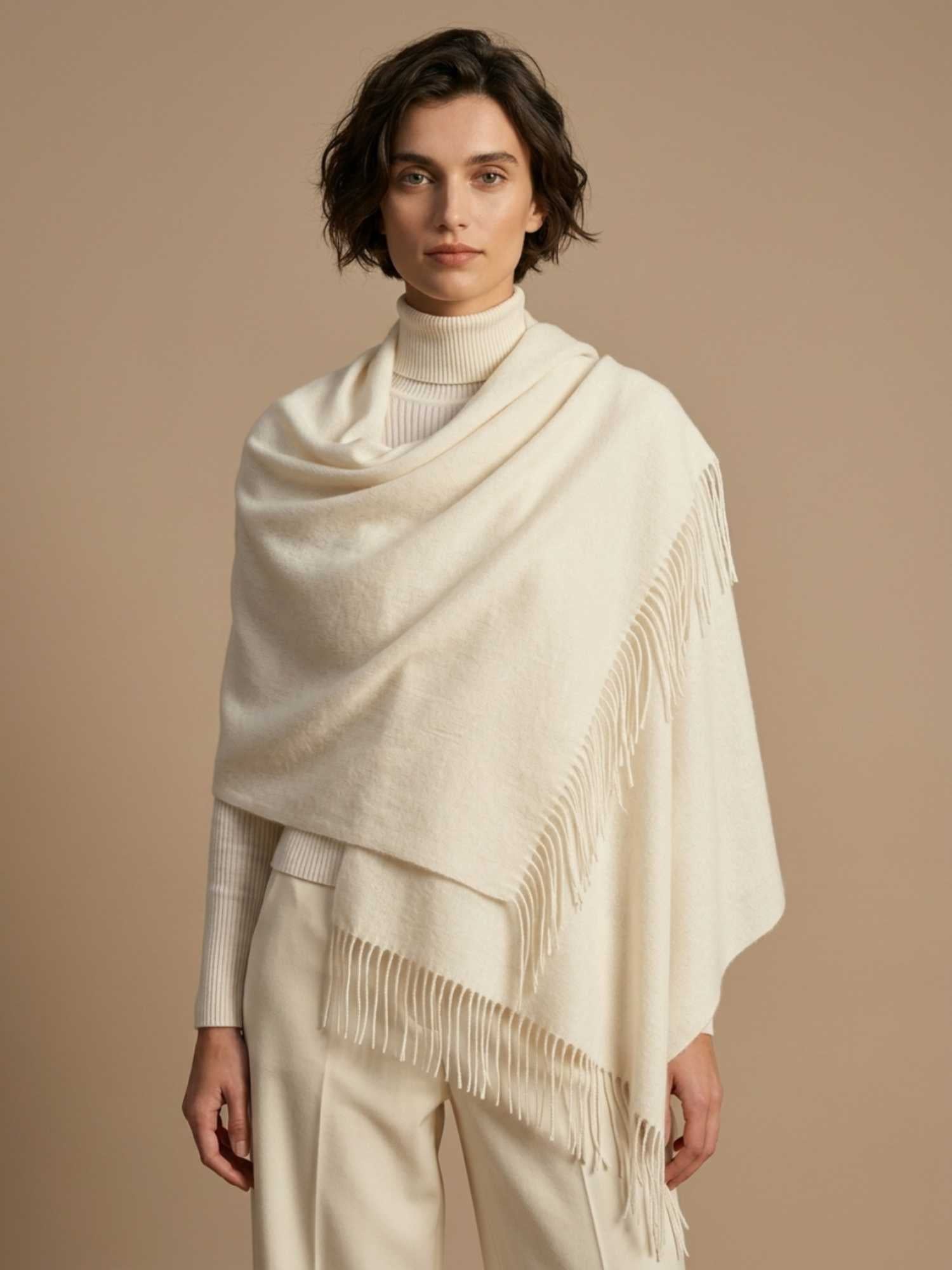
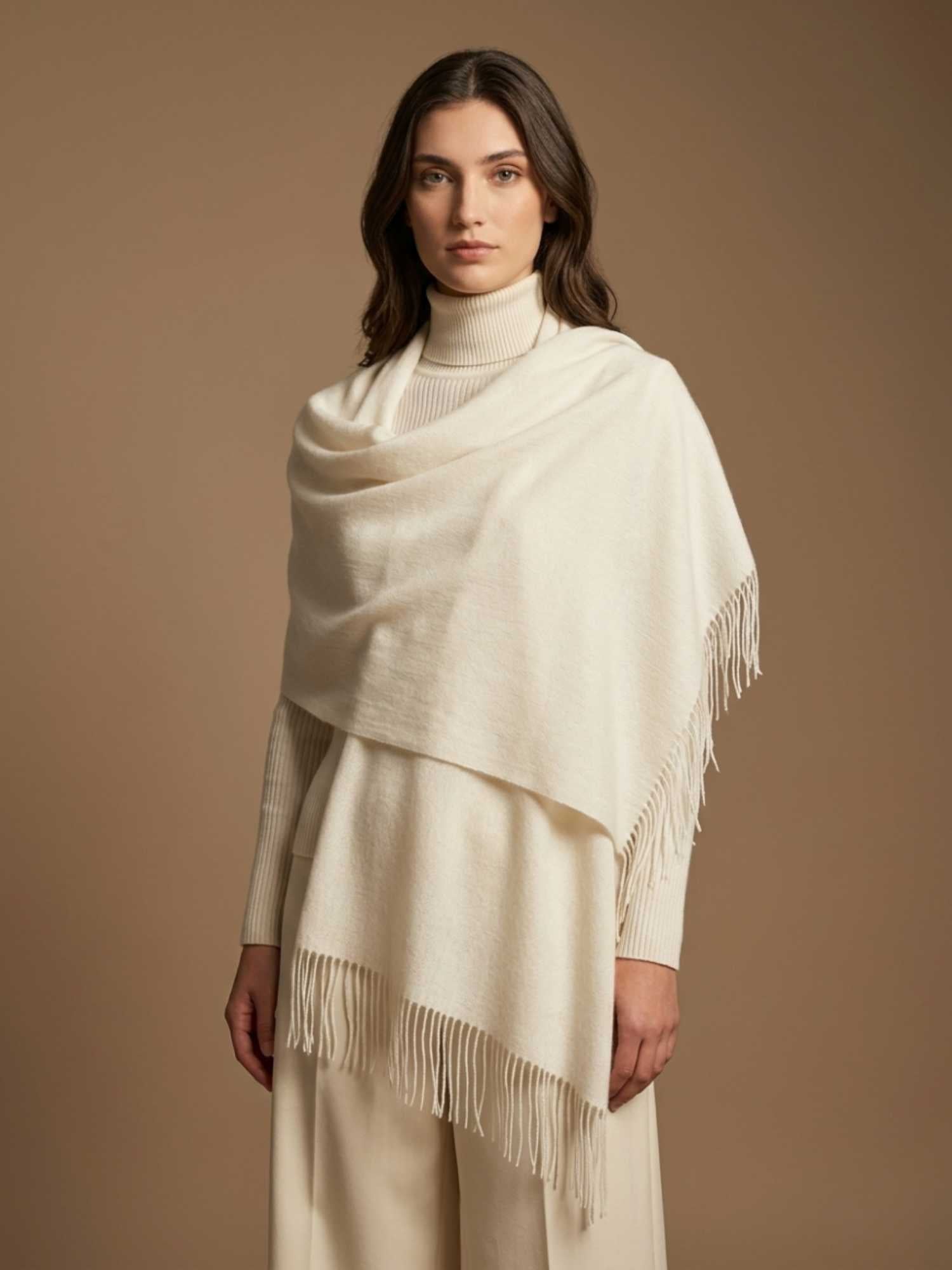
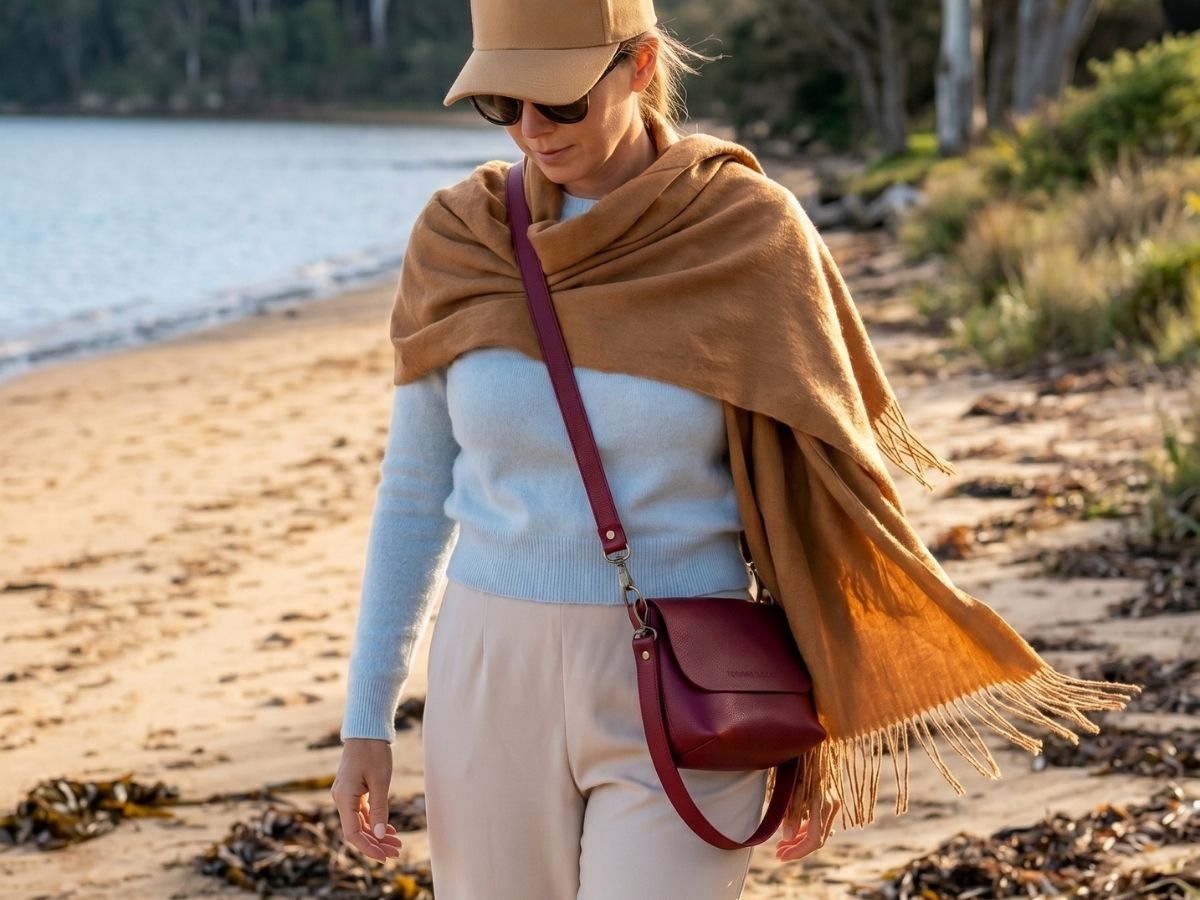
Yes — if you choose the piece by weight, not by fibre. The one to reach for is the shawl. A baby alpaca shawl is woven fine and wide — about 200 by 70 centimetres and around 190 grams, and the silk blends are lighter still at roughly 100 grams. Spread over that area, it is a very thin layer: exactly what you want over bare shoulders when the breeze comes up on a summer evening, on a ferry, at an outdoor table after the sun has gone. It takes the edge off without ever making you warm. It folds to nothing in a bag. Our customers wear shawls twelve months of the year; the winter piece is the scarf.
The scarf is the thicker weave. Narrower and denser — 180 by 30 centimetres, around 150 grams — it is built to sit close at the neck and hold warmth there, which is what you want in July and not what you want in January. If the question is "which one for winter", it is the scarf. If the question is "which one will I actually use all year", it is the shawl.
For knitwear in the warmer months, look for the open-weave jumpers. The openwork knit lets air through, so it works as a spring layer or over a dress on a summer evening rather than as cold-weather insulation. And if you live somewhere with a real winter, the same logic runs the other way: the classic and cable-knit jumpers, the throws and the coats are the pieces built for it.
Are alpaca jumpers (sweaters) worth it?
If you will wear it for years, yes. A baby alpaca jumper is warmer than the same weight of wool or cashmere, doesn't itch, pills far less than cashmere and needs cleaning once a season. What you give up is spring: it is a relaxed, draping knit, not a fitted one that snaps back. Choose the weight for your climate — open weave for spring and mild winters, classic or cable knit for the cold. If you want a close-fitting ribbed jumper that holds its shape through hard wear, merino or a wool blend does that job better. If you want the piece you reach for every cold morning for a decade, alpaca is the better buy.
Which is better, merino or alpaca?
They do different jobs. Merino is a performance fibre — breathable, moisture-wicking, elastic — and it is as useful in a base layer or activewear as in knitwear. Fine merino (15–19 microns) is soft and wears comfortably against skin, though it does carry lanolin. Merino is the fibre for movement and sweat: a travelling layer, something that does several jobs. Baby alpaca is the fibre when warmth and texture are the point. The two are sometimes blended, each filling in what the other lacks — our rustic throws are 70% baby alpaca, 30% merino for exactly that reason.

What is more luxurious than cashmere?
Vicuña. It is the only natural fibre in regular use that is finer than cashmere — around 12 microns against cashmere's 14–19 — and it comes from a wild animal that can be shorn only once every two to three years, so a scarf costs many times what a cashmere one does. Below it sits royal alpaca, the finest few percent of the alpaca clip at under 19 microns, which matches top-grade cashmere for fineness and outlasts it. If "more luxurious" means rarer and finer, the answer is vicuña; if it means the fibre that still looks new after a decade, it is baby alpaca.
What is the difference between vicuña and alpaca?
Both are Andean camelids; that is where the similarity ends. The alpaca is domesticated, sheared once a year, and there are millions of them. The vicuña is wild — it cannot be farmed — lives at altitude in the Peruvian highlands, and gives a fleece of around 12 microns, the finest natural fibre on the planet. The Incas called it the fibre of the gods and reserved it for royalty.
Harvesting vicuña still requires a chaccu: a communal round-up with roots in the Inca era, in which the animals are gathered, shorn gently and released. Each animal can be shorn only once every two to three years, and yields a few hundred grams. That is why a vicuña scarf costs many times a baby alpaca one — the scarcity is real, not manufactured. Baby alpaca is the same landscape and the same tradition at a price you can wear every day.

Choosing between them
For most people the question comes down to baby alpaca or cashmere, and it comes down to this. Cashmere is marginally finer in the hand. Baby alpaca is noticeably warmer for its weight, holds its surface through years of wear and asks less of you. For a piece you plan to live in — a shawl, a wrap, a throw, a jumper — baby alpaca is the more forgiving choice over time.

For a closer look at baby alpaca — where it comes from, how it's harvested, and what to look for when buying — read our Ultimate Guide to Baby Alpaca Wool.




Leave a comment
This site is protected by hCaptcha and the hCaptcha Privacy Policy and Terms of Service apply.